|
|
STORE HOURS
Mon-Sat: 9am-6pm
TASTING ROOM HOURS
9am-5:45pm
Closed Sundays |
Prices Posted on our site are
subject to change without notice.
We are seeing our trade partners
increasing prices at a fast & furious rate.
(They're Fast and we're Furious.)
| | More Piemontese Wines


Ages ago! Elio Altare...
-
- ELIO ALTARE
- This
fellow always seems somewhat shocked by all the praise and adulation heaped on his wines.
I recall first meeting him on a trip to Piemonte with Randall Grahm. This
photo on the right was taken on that visit many years ago!
He was one of the first modernistas and his wines remain much in
the same style as they were twenty years ago.
There's something to be said for a vintner who has a style they prefer to
produce and they don't change to suit the tastes of particular critics or
consumers. Altare is confident in the style of wines they've been
making and their track record is consistent.
Altare's winery and most of its vineyards are
located in the Annunziata "Frazione" as you drive up the hill from
the Alba-Barolo road to the town of La Morra. You'll see signs for
Altare and his neighbors, Renato Corino and Mauro Veglio, growers who've
benefited from the pioneering efforts of Signor Altare.
The estate has grown a bit and today they make a Barolo from a parcel
in Serralunga, several miles away from La Morra.
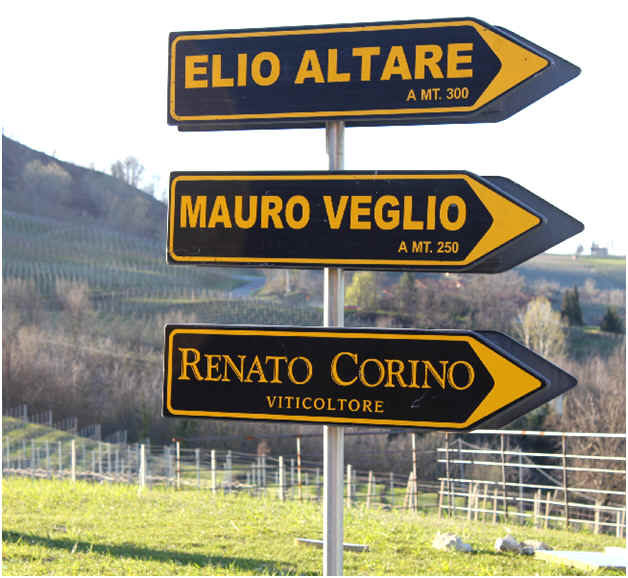
When Elio Altare was a youngster (in the 1970s), he visited the
region of Burgundy in France and this helped change his outlook on being a
farmer. For one thing, not many vignerons in Burgundy had orchards of
fruit trees to tend. They merely grew grapes, as best as they could, and
made wine. And the wines they made were matured not in big, old wooden
tanks, but smaller French oak barrels.
Returning home, he embarked on changing the family estate from one featuring
hazelnuts, apples and peaches to one focusing on grapes and winemaking.
Altare took a chainsaw to the fruit trees and the old big botte (wood
tanks), creating a massive amount of fire wood as well as angering his father
Giovanni. Elio saw his future involved making big changes, though his Pop
was reasonable content with the status quo.
In fact, the old man disowned his renegade son.

Our first visit back in the late 1980s or early 1990s was interesting as Elio and
Bonny Doon Vineyard wizard Randall Grahm compared notes on winemaking. Altare
was quite excited to bounce his ideas off Randall and he enthusiastically offered us
Barbera and Nebbiolo wines to taste. Frankly, I thought everything merely tasted of
oak. When Randall and I departed, I said the only way you could tell the wines apart
was by the color, Barbera being a bit deeper in hue.
Of course, many wine writers embraced this "new style" of wine, the oak being
something which they could understand more easily than the aromas and flavors of Nebbiolo
(for example).
Over the years the wines of Altare have become more refined, let's say, in
terms of balance and tannin. Though a couple of
"Langhe" wines are French oak-matured, they do show some fruit to go along with
all that oak. These are Langhe Arborina (Nebbiolo) and Langhe Larigi (Barbera).
Langhe "La Villa" is a blend of Nebbiolo and Barbera.

We see a few bottles of his "normal" (ha! Like Altare makes
"normal" wines!!!) Dolcetto, Barbera and Barolo. The Dolcetto
and Barbera wines usually show some elegance and balance. Dolcetto is properly
fruity and not tannic to excess. Signor Altare has really become a wine
"master" over the years, creating some exceptional wines!
These days Altare's daughter Silvia is the face of the winery. She's a
charming lady and very serious vintner, taking after her father. She has
taste for good wine and is hell-bent on making great wines.

Barolo
tends to be a medium-weight wine and, though oak-aged, isn't loaded with wood.
There's a supple texture to the wine....I would say that's Altare's
"signature."
Altare lost most of one good vintage as his cork supplier provided him with
a batch of corks which had a very high failure rate. This entanglement
made for quite a court case, with the results being somewhat a "private
matter." All we learned was that Altare would continue to use the
same firm whose corks were defective. This would lead one to suspect
the cork purveyor was not entirely at fault in the wine from that vintage
(1997) having some problems.
In November of 2002 we opened a bottle of 1985 Barolo "Vigna
Arborina." The wine was fantastic! Still quite alive and
vital, with a beautiful bouquet and great aromas. On the palate there
was still a bit of tannin which bodes well if YOU have any bottles in your
stash of wines (this was my last bottle and it died a noble
death!). The point is, if the Nebbiolo has the character of a
good wine, eventually whatever wood was used to mature the wine, will be
integrated.
So the argument of modernista or traditionalist is not so important if
we've opening older bottles of Barolo or Barbaresco.
With sufficient bottle aging, a good Nebbiolo will display its nobility whether
it saw small French oak barriques or large botte grande.

His 2015 is a
delight. It is certainly drinkable now, but if you can exercise a bit
of restraint, you'll be handsomely rewarded. I'd expect this vintage
can be cellared for 10-15 years, certainly. Today the wine seems
to show a glimpse of what it promises. Dark cherry notes with a bit of
plum and the barest touch of oak...a far cry from Altare Barolo bottlings 20
years ago.
These days their "basic" Barolo is a blend of fruit from four
towns: La Morra, of course, and Serralunga, Barolo and Castiglione
Falletto. The vines range from about 20 to 30 years of age.
It's routinely been a very elegant and mildly woodsy expression of
Nebbiolo.
The Barolo from their Arborina vineyard near the winery tends to display a
fairly woodsy note, as well. It's usually about as supple on the palate as
one finds in good, well-farmed Barolo.
They make a wine from the famous Serralunga cru, Cerretta. The vines are
about 15 years of age, so they're mature and have a long life ahead. This
tends to be more tannic, as one might expect of a Serralunga-area
Nebbiolo. If you have the chance to taste their wines, side by side, you
should notice the Cerretta, though it's matured similarly to their other Barolos
(24 months in French oak), handles the wood differently. It has a more
tannic structure and the oak seems less prominent (or dominant) in this wine.

There's a small production of Brunate Barolo.
Their holding in Brunate range in age from 20 years on the young
end of the spectrum to about 90 years. This wine usually offers a mildly
floral tone, along with a touch of wood spice.
- We're
fans of his Larigi vineyard wine...this is a barrel-aged Barbera from
vineyards planted in 1948 by Nonno Giovanni. They use roto-fermenters
for the fermentation so there's plenty of 'fruit' to the wine.
It's then matured for about a year and a half in small French oak
barrels...all the wood is new, so it's got a marvelously showy, freshly
woodsy fragrance and flavor. 2010 vintage...fairly big, so pairing
this with grilled or roasted meats is ideal.
-

The 2024 Dolcetto d'Alba is lighter than other recent vintages. Very modern style, with
medium ruby color and plenty of red and black fruit notes.
No oak...and it's nicely balanced, so you need not age it.
We prefer this sort of red wine served at cool cellar temperature, around 50
degrees.
It pairs with all sorts of dishes, from light appetizers to pastas to white or
red meats.

The 2024 Barbera d'Alba is another red featuring lots of dark fruit
notes...think about a bowl of blackberries or blueberries...
It sees a few months in oak, but only a few. And they make a wine
emphasizing the dark berries without the wood being hugely prominent.
We prefer this as a young red, serving it lightly chilled. It matches well
with salumi, tomato-sauced pastas, a Delfina pizza, grilled sausages, etc.
-
-
- Currently in stock:
2015 ALTARE BAROLO SALE $84.99
2024 ALTARE BARBERA D'ALBA $34.99
2024 ALTARE DOLCETTO D'ALBA $27.99
-
-

We've noted that most of the world's top winemakers are people who are
familiar with wines made in other prominent wine regions.
The Altare family have a large collection of remarkable wines from Italy and
beyond...
And if you look closely, you'll see some bottles of Bartolo Mascarello, one
of the fiercest advocates of "traditionally-styled" wines.
Bartolo thoroughly disliked the style of young Barolo being made by Altare.

-
-

They have a nice cellar full of wines "aging"...
-

Silvia shows off an early vintage of her father's...

...And one of her Grandpa's bottles.

Grandpa built those charming little four-pack carriers.
-

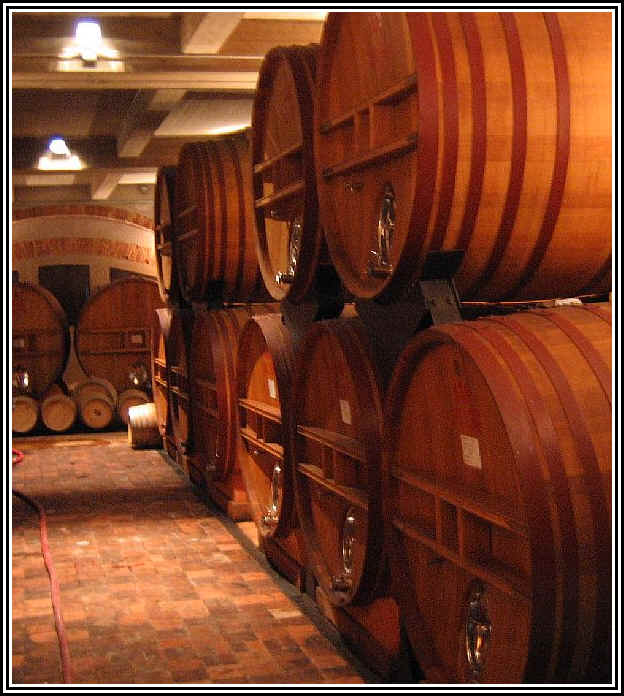
They do have a lot of nice French oak barrels.


One of the Altare 'secrets' is the use of roto-fermenters (that big
tank in the background) which many winemakers claim helps extract the
maximum character from the grapes, while not producing overly-aggressive
tannins.

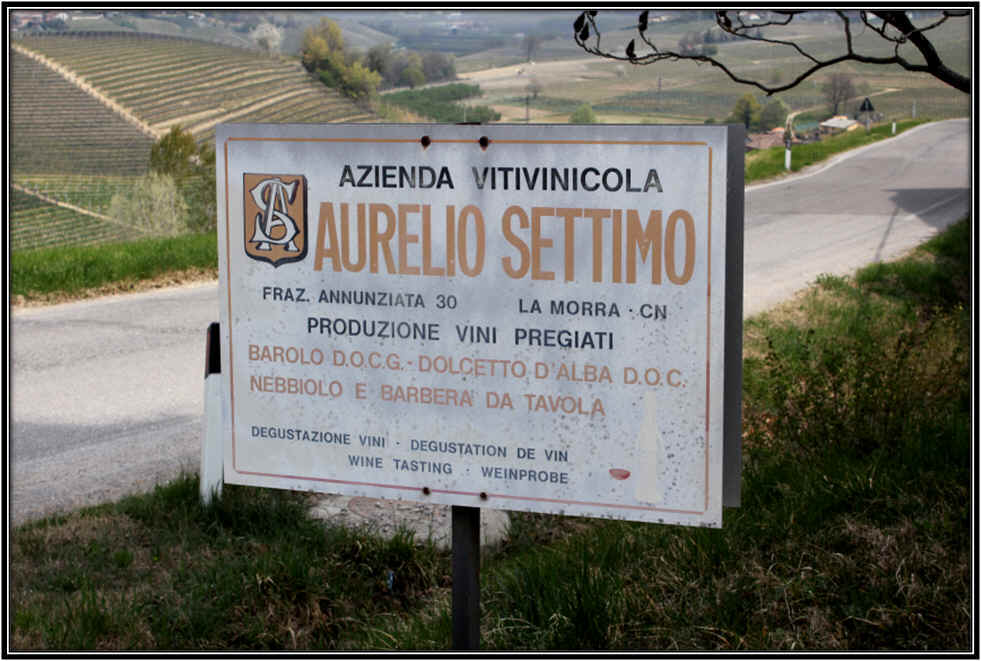
-
- AURELIO SETTIMO
- A modest little azienda in the Barolo-area village of La Morra, the Settimo
family makes very traditional wines.
We've known Tiziana Settimo for probably more than three decades...the
Settimo wines have long been on our radar screen as they are decidedly
"old school" wines.
Ages ago her wines were brought in to California by a small wine
distributor/importer who also grew grapes in the North Coast. Italian
wines were not his strength, though and he gave up Settimo's wines around
2009, or so.
We would taste her wines every year and wonder why someone with an interest
in traditionally-styled Barolo wouldn't step up to the plate and give these
a go.
Finally a local importer signed up to import Settimo wines and he's finding
a receptive audience for these. And why not?
The quality is good and the prices are quite attractive for the consumer.
He's having success with the wines, as one might expect given the
price/quality ratio.
The winery was founded in 1962 and Aurelio was in charge until his death in
2007.
Aurelio's parents settled on the property during World War II and the farm had
all sorts of activities, with wine grapes as merely once facet of the
business. Domenico Settimo made and bottled a bit of wine, though it
was the focus of his farming operations. For the most part, the
Settimo grapes were sold to neighboring winemakers. Domenico passed away in the early 1960s and it was
at that point that grape growing and winemaking became the focus here as
Aurelio realized he had something special.
Traditionally-styled Nebbiolo wines are produced at this little
cellar. They make two bottlings of Barolo, a 'regular' and a single
vineyard "Rocche" bottling. There's a Nebbiolo Langhe and a
tiny bit of Dolcetto. They've been dabbling with making a Rose wine,
too and Tiziana has made a wacky little sweet wine for her own amusement and
to share with friends and family.

Over the years they've refined the winemaking, reducing the amount of skin contact given
to their Barolo, though Tiziana explains they typically have about 15 days of skin contact
during fermentation of their Barolo. Like many "traditional" winemakers,
they view the use of new oak as robbing the wine of aging potential and changing the
inherent character of "Barolo."

As a result, you'll find only botte grande in the cellar for maturing
Settimo Barolo.
-

- The 2010 Barolo
"Rocche" is a marvelous wine!
Some 2010s are seemingly closed down and tight. The Settimo is
certainly well-structured for additional cellaring, but the wine was
slightly opened when we tasted it again in March of 2017.
Since then we've tasted it several times...it's beautifully balanced and
showing well so of course we've enjoyed a few bottles!
It is now sold out, but we did receive a small quantity of the 2008
"Rocche" and it is, as we've come to expect, classic.
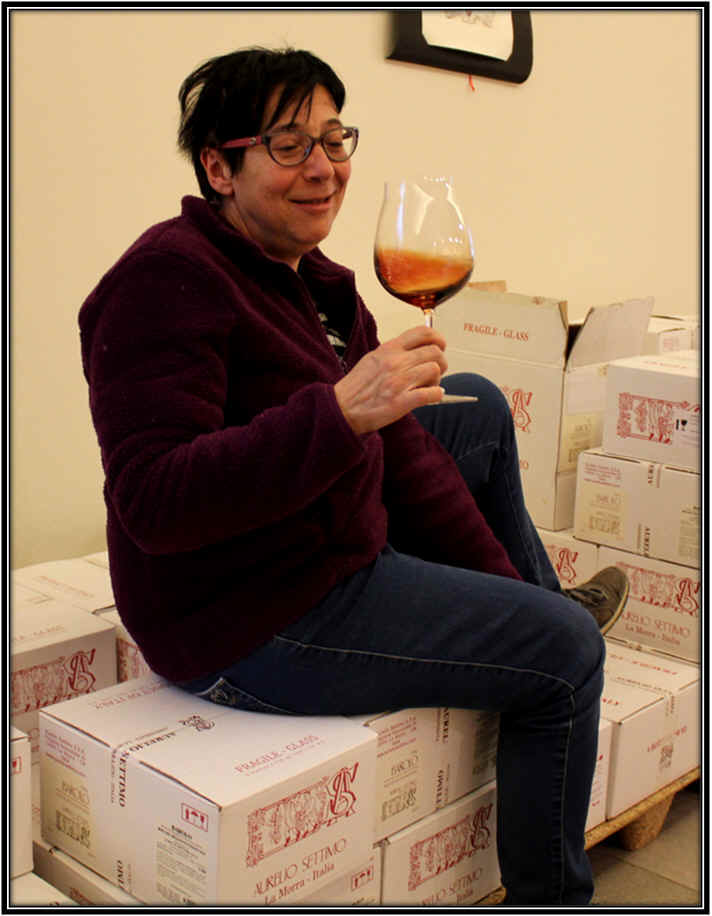
Check out the color of the wine in Tiziana's glass: it's brickish orange,
the proper color for mature Barolo.
-

-
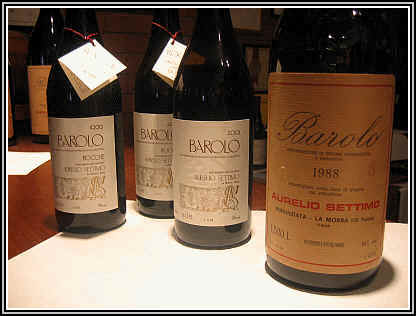
I had the opportunity to taste an old Barolo from Settimo in April of
2008. I guessed it to be the 1979. It was their 1978. And
the wine was quite impressive as it displayed the truffle-like notes of good
Nebbiolo with a hint of a tarry element. It was a world away from the
"gobs of fruit" wines so popular in the New World today!
The 1999 Rocche, tasted in Spring of 2009, is blossoming beautifully...it
has the truffle-like fragrances we expect in this wine. It's
medium-bodied on the palate and still mildly tannic. I recall tasting
this in its youth when it was rather peppery, but didn't find the spice
notes at this stage. Very good now and it should cellar well for
another 5-10 years, well-stored.
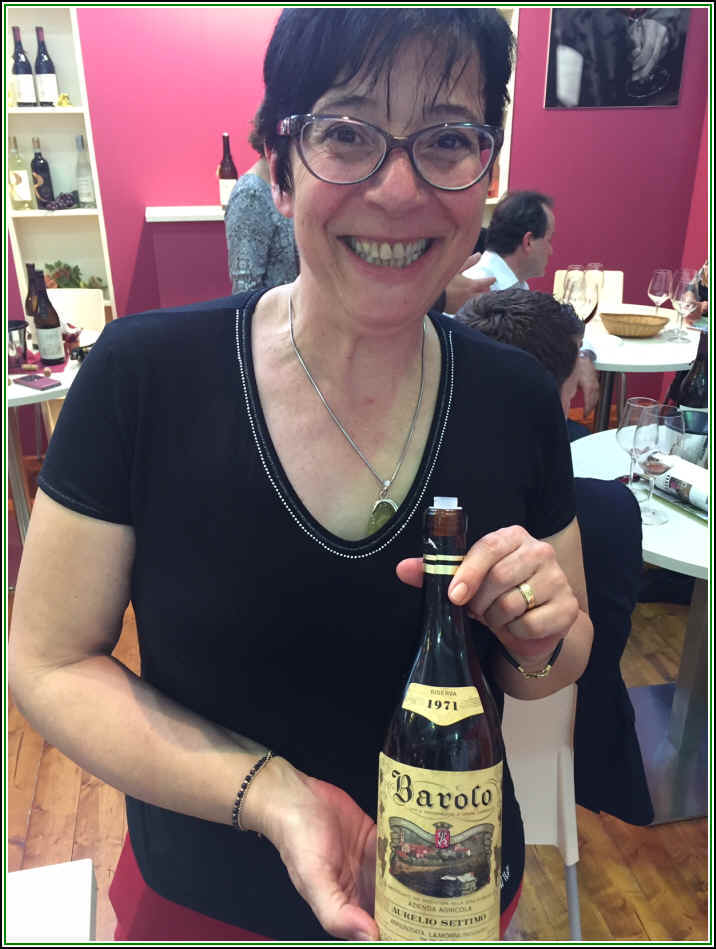
A recent photo...maybe 2018...with an old vintage and young winemaker.
-

In the prized "Rocche" vineyard in La Morra...And you can see
they don't spray weed-killers in the vineyard.
-
- Currently available: 2008 Barolo "Rocche"
Sold Out
2016 BAROLO "Rocche" $69.99
-
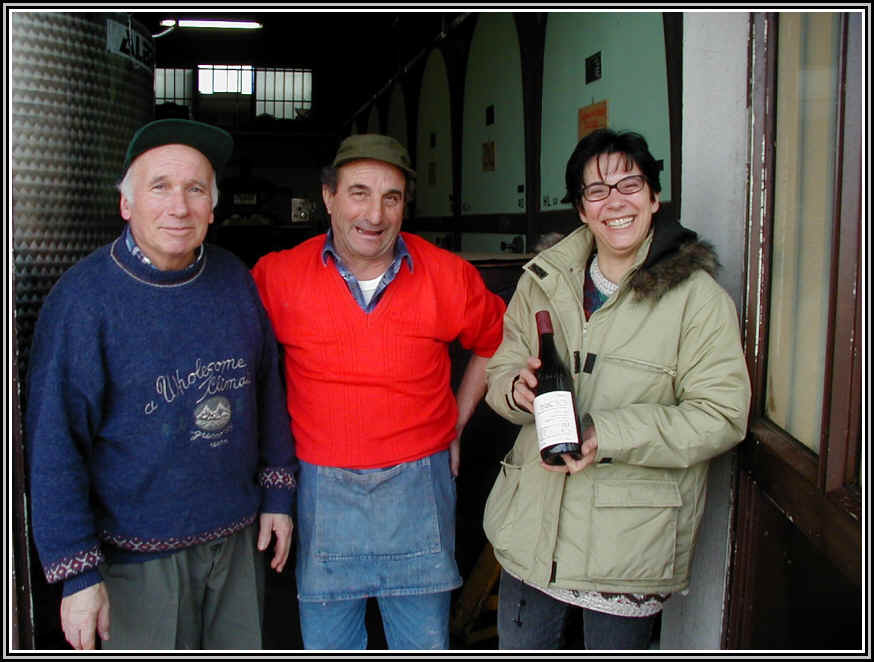
- Photo: The late Aurelio Settimo on the left, his cellar helper in the
middle and daughter Tiziana with the bottle and big smile.
-
-
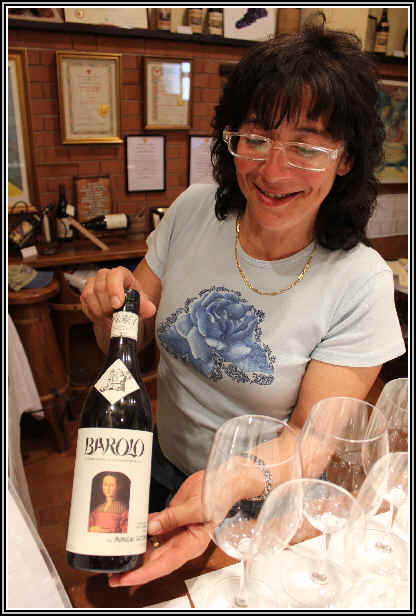
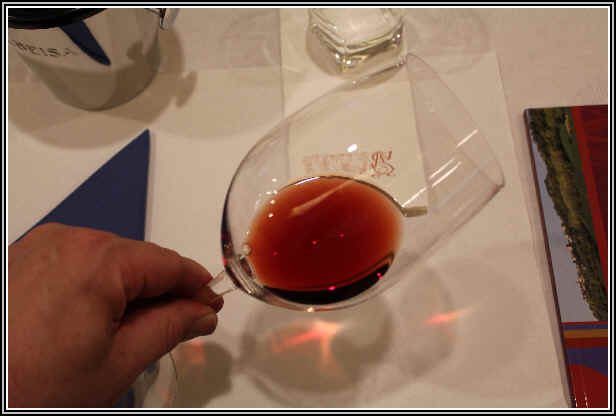
The 1979, tasted in 2010.
-

-
ANDREA OBERTO and FABIO OBERTO
- We've long known the wines of Andrea Oberto from La Morra. The
vineyards and cellar are located nearly 2 kilometers north of
"downtown" La Morra on a road that leads to the town of
Verduno.
The Oberto family bought the property in the late 1950s and grew grapes
& peaches as well as raising cattle. Andrea Oberto, early in
adulthood, was a truck driver as there were too many siblings and not
enough work on the family farm. In 1978 things changed
dramatically when his father passed away. Andrea then took over the
winery and was back working in the vineyards he knew so well from his
childhood.
Oberto routinely made good wines and they'd likely be better know had he
been interested in promoting the wines and traveling around the
world. But he has been more content to make good wines, sell them at
sensible prices and let the world find him.
We have been tasting wines from this estate regularly for many
years. The Obertos are frequently showing their wines at the annual
VinItaly wine far alongside Conterno-Fantino, Domenico Clerico, Pelissero,
Chiara Boschis, Elio Grasso, Malvira, Matteo Correggia and Cigliutti in a
private stand. That's a nice roster with which to be
affiliated.
Oberto's wines are right in there, quality-wise, with those
highly-regarded wineries.
And yet only the most Langhe-savvy consumers would know this little
property.

Oberto's son has his own winery in the same neighborhood,
choosing to not work with his parents.


They have a fair quantity of small oak, but I've never thought of their wines
as being woody or oaked.
As you can see, the small barrels are of seasoned (used) cooperage.

Having those large casks allows them to mature the wines slowly and they can
moderate the wood. But, as noted earlier, the wines typically show
just a hint of wood, if that.

Andrea Oberto, Fabio Oberto's papa.


Mama Oberto lends a hand in the tasting room.
The property comprises something like 16 hectares today.
Barbera, Nebbiolo, Dolcetto and Nascetta. They're also making a bit of
Arneis from grapes grown in the Roero. Arneis is made in both a sparkling
version and a still white wine rendition.
They make several Barbera wines and a number of Barolo bottlings.
Fabio's wines are labeled "La Collina di Dioniso," the hill of
Dionysus, the Greek god of wine. The young Oberto says he needs all the
help he can get.
 
Papa Andrea sent some bottles of 2016 Barolo. We've tasted
this a couple of times...it's a wine which is developing and probably needs more
time.
If you're going to open a bottle give it maybe an hour or two to blossom.
-
Currently in stock: SALE $34.99

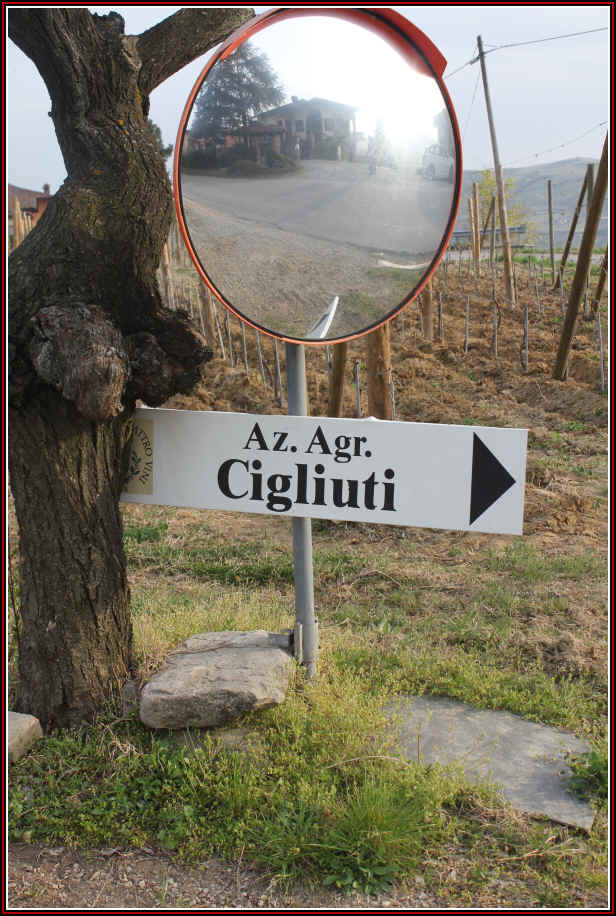
CIGLIUTTI
 The
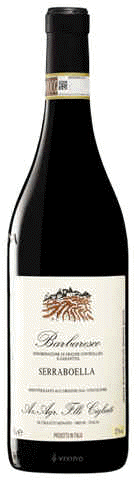
Cigliuti name is identified as nearly synonymous with the famous vineyard
site in Barbaresco called Serraboella. The
Cigliuti name is identified as nearly synonymous with the famous vineyard
site in Barbaresco called Serraboella.
The winery and its vineyards are located about 2 kilometers from the old
town of Neive.
These days Claudia Cigliuti is the face of the winery, though her sister
Silvia works in the family business along with Papa Renato and Mama
Dina. Renato's father and uncle and grandfather had been
growing grapes in the Serraboella area and they mostly sold the fruit to
others, keeping a small quantity for their own production which was for
the family and a few friends.
Renato's first commercial vintage was in the 1960s and he produced all of
300 bottles. We think 1964 was the first official vintage of
bottled wine from Cigliuti's 7 or 8 hectares of vineyards. He was
enchanted by life in the vineyards and being "king" of his own
little hill where he could watch the sun setting on the village of Neive
nearby.
Back in the 1960s, many of his neighbors were taking jobs in "big
cities" as the labor may have been easier as a factory worker than as
a farmer tending the vines. Renato preferred the vineyard life and
embraced the agricultural work. He had been part of a group of wine
producers who had been represented in the American market by Marco de
Grazia in the late 1980s and 1990s.
Cigliuti had been part of that group and so he was in league with people
such as Elio Altare, Luciano Sandrone, Domenico Clerico and Giorgio
Rivetti. Cigliuti was a proponent, as were most of those winemakers,
of green-harvesting to reduce the quantity of grapes on the vines.
Old timers were horrified by the notion of reducing crop size, but
Cigliuti, as others, felt they'd get higher quality fruit by removing some
of the bunches part-way through the growing season.
He followed the examples of many of his colleagues and invested in small
French oak barrels as that was quite fashionable in the 1980s and
1990s. Some old-timers said this was a mistake and Cigliuti dabbled
with small cooperage for some years but these days, they've returned to a
more traditional style of Barbaresco, aging the wine in large wood botte
grande.
Renato didn't expand his production over the years, content with making
wine from 7 or 8 hectares of vineyards. Besides, he had two
daughters and what's the chance those females would be interested in the
rigors of vineyard and cellar work?
Well, it turns out they were interested and today you'll
likely see them tending the vines or working in the cellar.
Production remains small, given they do not buy grapes and have
a limited amount of vineyards. They don't spend much time doing "wine
marketing" and traveling around the world to promote their wines. The
quality of the wines is good, though, and with sensibly-priced wines, the world
seems to beat a path to Serraboella and Cigliuti wines are a bit difficult to obtain.
We've typically been fans of their Serraboella bottling of Barbaresco.
These days it's a classically-styled example of good Nebbiolo. And it smells and
tastes a bit particular as they don't manipulate the wine. This is the
result of their focus on the vineyards. The juice is fermented using
indigenous yeasts in stainless steel tanks. They typically have
about a 3 week maceration period for their Barbaresco wines. Old, old
timers would leave the skins in contact with the juice and wine for a month, or
more. Those young whippersnappers like Clerico, Altare and Sandrone
shortened the length of time for skin contact and made wines which were less
aggressively astringent.
Cigliuti's protocol then calls for the Barbaresco to spend 24 to 26 months in
wood to develop and to round off the harsh "edges."
Claudia explains the Serraboella vineyard features 60 year old Nebbiolo vines,
though their web site says the youngest vines in that site are 25 years of age,
and the soils are a mix of chalk and limestone. It's routinely been a good
bottle of wine.
We currently have the 2012 in stock...it's medium bodied with some sour cherry
and red berry fruit notes. The wine is moderately tannic and still young
(of course).


A tank with wine that "will be" Barbaresco once it achieves the proper
amount of aging.
You'll see signs such as this in wineries all over Italy indicating the wine in
that tank or barrel "will be" of some particular appellation at some
point in the future.


The cellars are, as you can see, spotless.
This is one indication of a diligent vintner.
The wines are labeled as "Fratelli Cigliuti," since the wines were
originally made by Renato Cigliuti's father and uncle.


They have a small "library" of older vintages.

Claudia Cigliuti.


Currently in stock: CIGLIUTI 2012 BARBARESCO
"Serraboella" $69.99
*************************************************************

-
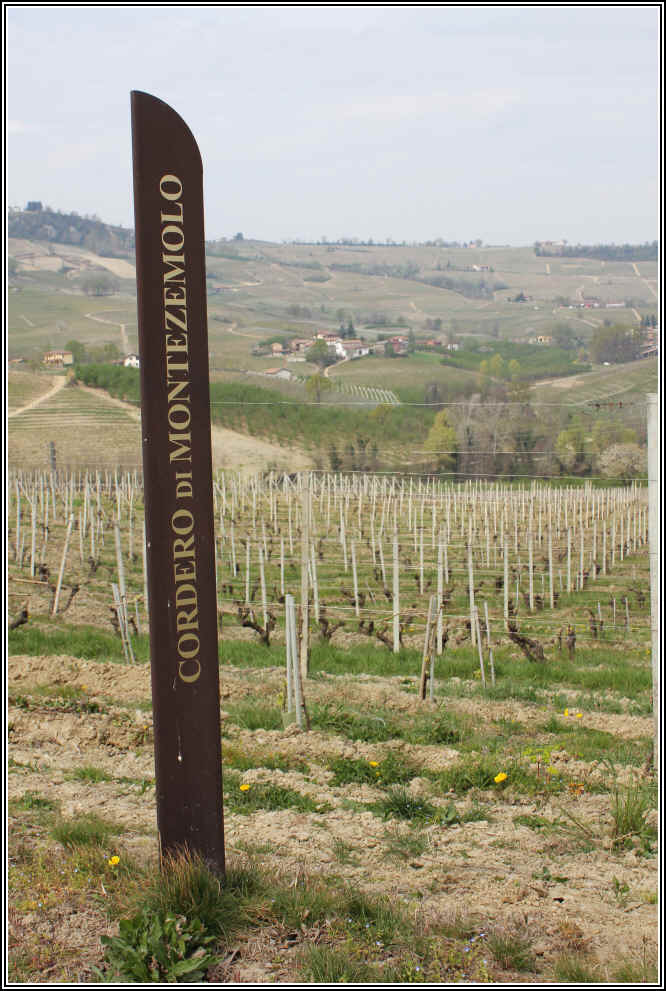
CORDERO DI MONTEZEMOLO
- The Cordero family hails from Spain, we're told and they settled in
Piemonte about 500 to 600 years ago. And there's a connection
to a branch of the local Falletti family which has own hillside property
in La Morra since the mid-1300s.
Costanzo Falletti married Eulalia della Chiesa in the mid-1800s and they
planted a cedar of Lebanon tree on the Monfalletto hill which is said to
be the exact center of the Barolo region.
-
- The last of the Falletti's had one child and she married a Cordero di
Montezemolo, a family of note situated in nearby Mondovi. The couple
had one son, Paolo Cordero di Montezemolo. Unfortunately the couple died
when Paolo was a small kid and he was raised by his Nonna Luigia.
She died in 1941 and young Paolo inherited the family holdings at the
tender age of 15.
In the mid-1960s Paolo acquired a couple of hectares in the Villero cru of
Castiglione Falletto and the winery makes its famed Enrico VI Barolo from
that vineyard.
Currently they farm about 51 hectares of vineyards, mostly near the winery
in La Morra.

-
- Back in the early 1980s we had their wines in the shop and once visited
the estate. Arranging visits back then was not as easy as
today. Fax machines were a novelty and sending a fax to Italy was
tricky as many offices turned off the electricity in the office when they
closed for the day. Other wineries, with a fax machine in the house,
disconnected it so it would not wake them up in the middle of the night.
We can't recall how we arranged to visit, but we remember a very elegant
Paolo Cordero opening the door and showing us around. He was dressed
far differently than most winemakers today: he had on a dress shirt
and wore a tie, with a sweater vest. But the fellow was as elegant
as his Barolo and it showed. He was also an early modernista, not
because he used French oak for his Barolo, but because there was more
fruit than normal for back in those days and the wines were less
astringent and aggressive when they were young.
-

Today they have a modern cellar with numerous temperature-controlled
tanks.
These days the grandkids of the late Paolo Cordero, Elena and Alberto, run
the show with their father Giovanni. Alberto did a stint as the head
of the Barolo and Barbaresco consorzio.
-
- The cellar is immaculate and filled with wood cooperage of various
dimensions.
-
-

Reproductions of their historic labels.
-

Alberto Cordero showing off their lovely wines...
-

A photo of Paolo Cordero back in the day...
 We
tasted many very good wines on our recent visit to the Cordero winery.
This is not new, of course...they've routinely been making wines we find
interesting and worthy of purchase. We
tasted many very good wines on our recent visit to the Cordero winery.
This is not new, of course...they've routinely been making wines we find
interesting and worthy of purchase.
We have the 2019 "Monfalletto" Barolo in the shop presently.
It comes from various parcels of vineyards near the winery in La Morra.
Vine age ranges from 15 years to 50. They do a pre-fermentation
maceration for maybe four or five days and then set about fermenting the juice,
with the skins in contact for another 10 or 12 days.
The wine then goes into wood for its malolactic fermentation and then it stays
in wood for a year and a half to two years.
We've opened a few bottles of this charming, young Barolo. The 2019 is routinely
good and thanks to its elegant balance of fruit and tannin, we've noticed
tasters routinely give it the thumbs up. If you've had previous vintages,
this bottling is a shade or two bigger than normal.
It's certainly approachable now and should age well for another decade.
Currently in stock: 2019 CORDERO DI MONTEZEMOLO
"Monfalletto" BAROLO SALE $59.99
-
-
-

-
- PRUNOTTO
 Now under the ownership of the Antinori "empire" from Tuscany, this
winery had been making good wines for many years. The winery is located just on the
outskirts of the city of Alba, a central location given they're making wines from fruit
grown to the south in Barolo and the north in Asti and Barbaresco. Now under the ownership of the Antinori "empire" from Tuscany, this
winery had been making good wines for many years. The winery is located just on the
outskirts of the city of Alba, a central location given they're making wines from fruit
grown to the south in Barolo and the north in Asti and Barbaresco.
To our taste, the wines are a bit superficial and perhaps lacking the 'soul'
of wines produced by wineries with a bit more focus and attention to detail
in the vineyard.
As for their once grand Barolo wines these days...they're well off the pace set by good, small,
artisan producers. We're sad to see this brand turning out such
standard to ordinary quality wines...you'd think, given the resources of the
Antinori family, this place would have higher standards. Or, maybe
not.
Currently available: Special order
-
-
BOROLI
- I know some critics will tell you there's "too much oak being used in
making Barolo" these days.
The Boroli winery in Castiglione Falletto is one of Piemonte's
"woodiest" wineries. But that's because the outside of the
facility is covered in staves from old oak barrels!

The Boroli family, long-time book and map industry folks, sold their
publishing interests and bought some vineyards. The family owns two
vineyard sites, one north of Alba that's about 26 hectares. Here they
cultivate Dolcetto in a place ideally suited to that variety.
In the Barolo zone, they own about 10 hectares in Castiglione Falletto and it's
here they have a winery where you will find tons of oak. They purchased
this property from a big negociant firm and remodeled the winery, essentially
building a brand new facility which was designed by one of the four Boroli
brothers (who's an architect). The outside of the building is covered in
staves from oak cooperage which they "inherited" from the previous
owner.
Their tasting room sits atop the winemaking facility and cellar. From here
you can have a wonderful look to the towns of Barolo and La Morra.

They have quite a range of cooperage, allowing them to balance
the use of oak in their wines.
-
The firm owns vineyards in two "grand" cru sites in
Barolo: One hectare of vines is located just outside the winery door in
the "Villero" cru and they purchased (in 2003) a small parcel of 1.2
hectares in the Cerequio cru. They also make a "Bussia"
bottling of Barolo along with a "simple" Barolo. In fantabulous
vintages, they'll offer a Villero bottling that's held back for additional aging
to obtain the "riserva" designation.
We had been fans of some of their early vintages (2001s were good), but tasting
recent vintages in 2019 and 2020, we were disappointed to find the wines were a
bit diffuse and seeming to lack character and depth.
-
Currently in stock: 2001 Boroli "Barolo" Villero Sold
Out
-
-
- LUIGI COPPO
 - The Coppo winery in the environs of the famous Asti area
city of Canelli had been owned by the Coppo family until 2021 when the young
generation had little interest in working with wine.
Only one of the family, Luigi Coppo was willing to continue working in the
family business, while his cousins were interested in cashing out.
In 2021 this long-time winery was purchased by the Dosio winery, a newish
producer from the Barolo town of La Morra.
The Coppo family members stayed on, but only briefly.
In having a look at the current website for Coppo, you might have no idea
that the place is not owned by the Coppo family. There is no mention
of the sale of the winery back in 2021.
Despite the ownership change, the winery still receives plaudits for its
famous Barbera called Pomorosso.
It carries the Nizza appellation which is a DOCG designated wine.
It's Barbera matured in French oak. I suspect they may have used a
greater percentage of new barrels some years ago, but the most recent
vintages we've tasted have had seemingly less wood.
Of course, a wine of great extract can soak up the wood so that you don't
think it's lavishly oaked.
Pomorosso is their top Barbera and it stood out from others a decade, or so,
ago.
But these days their neighbors, some of them anyway, are making a similarly
styled wine.
The Coppo family planted a fair bit of Chardonnay and they make a woodsy,
toasty version called Monteriolo. The cuttings came from France's
Burgundy region during the time of Napoleon.
- It's barrel fermented and matured in small French oak,
creating a rather complex and impressive Burgundian-styled wine.
Years ago when we would hang out with Paolo Coppo during the VinItaly wine
fair we asked Signor Coppo if they ever thought to change the name of this
fancy wine.
"Why? What would we change it to?" he asked.
I suggested changing the name to something akin to the fancy Barbera from
Nizza.
"What?"
Have you considered the name Pomodoro?
(That's the Italian word for "tomato.")
We had a good laugh, but they still call the fancy Chardonnay Monteriolo.
- The winery continues to make a good Moscato d'Asti.
And we have fond memories of a dynamite Bracchetto, a fizzy, mildly sweet
red.
That is no longer in production.
They now make a handful of bottle-fermented sparkling wines.
These are from the Alta Langa appellation.
And Coppo is making some Nebbiolo and Barolo bottlings from Langhe-area
vineyards.
The wines are handled in the Bay Area by a large liquor-focused distributor
that is imploding.
This is not surprising as the management of the company has long done a poor
job and they have lost a number of important brands.
They have a "fine wine" division but the reps were poorly
supervised and they were not productive in actually helping sell wines.
The company lists two dozen Coppo wines until you click on "In
Stock" and then they display only 8 wines, 4 of them being Gavi
bottlings going back 12 vintages!
And there are none of the bottle-fermented sparklers. They show only
two of the six Barbera bottlings and none are the noteworthy Pomorosso!
Monteriolo Chardonnay? Nope. Sorry.
So perhaps there's nobody at the rudder trying to navigate the choppy waters
of California wine distribution.
-
-

Paolo Coppo...Mister Pomorosso. Ages ago...

-
-
-

Bottles of Pomorosso ready to pack into shipping boxes and send off
around the world.
-
-
-
Currently in stock: 2006 COPPO BRACHETTO
D'ACQUI Sold Out and they are no longer producing Brachetto!
2015 COPPO Barbera d'Asti "POMOROSSO"
Sold Out
-
-
-
MOCCAGATTA
 The
Minuto family owns this well-known property in the Barbaresco
region. It's been in the family for many years and today is run
by brothers Sergio and Francesco Minuto. The
Minuto family owns this well-known property in the Barbaresco
region. It's been in the family for many years and today is run
by brothers Sergio and Francesco Minuto.
Though these fellows are now "old timers," they make a
rather modern style of wine.
Wines come from vineyards owned by the Minuto family or leased and
farmed by them. Barbaresco is the highlight here, though they do
make a small bit of Chardonnay and Dolcetto. There are three
bottlings of Barbaresco, Cole, Basarin and Bric Balin. I've
found the wines to be quite pretty and sweetly-oaked. In this
sense they are not precisely traditional or classically styled.
Basarin might be the most elegant, with Cole being a bit shy and quiet
to start. Bric Balin often has a tad more 'power' than the other
two.
We have their 2012 Bric Balin in stock presently.
It's showing itself as a mature Barbaresco...best to decant it off its
sediment and give it an hour to open up.
The 2019 Bric Balin is also in stock...some red fruit notes with a bit
of toasty oak. This is mildly tannic, being a relative
youngster.
It is delightful now especially paired with something a bit fatty, but
we expect this to continue to develop over the next ten years, or so.
We had a chance to taste a bit of 'history.' Signor Minuto
opened a bottle of 1971 Barbaresco and, at 26 years of age, this was a
lovely bottle of wine!

Franco Minuto...he passed away in September of 2019...
-
Currently in stock: 2012 MOCCAGATTA Barbaresco
"BRIC BALIN" (List $60) SALE $44.99
2019 MOCCAGATTA Barbaresco "BRIC BALIN" (List
$82) SALE $49.99

Signor Minuto shows off their barrique cellar.


PIO CESARE
- The
Pio Cesare winery is certainly an historic one, with its namesake as one
of the first producers of "fine" wine in the Langhe.
The history dates back to the year 1881 when Pio Cesare started this
little venture. It had been run by Pio Boffa, the great grandson of
Pio Cesare.
Signor Boffa passed away in the Spring of 2021 at age 63 we're told.
Pio, by the way, was the family name and Cesare was the
old boy's first name, yet today most folks would think it was the other
way 'round.
One day I brought a dear old friend over to the home of another dear old
friend. The two winemakers had great respect for each other and
they'd both been producing good wines for several decades. They
hadn't seen each other in a few years and so a bottle of the host's Barolo
was quickly opened and the two old geezers started chatting about the
good old days.
I enjoyed listening to these two codgers reminiscing about their salad
days and conditions in Piemonte "way back when." One of
them mentioned the name "Pio Cesare." I was curious to
hear his opinion...
"Pio Cesare was a great intenditore (expert) of Barolo and
Barbaresco. We'd bring our wagons of fruit to the Alba market and
Cesare would make the rounds. He always was able to select the very
best grapes and we were happy if he bought ours. It was a badge of
honor."
Well, today the winery has grown considerably and they cultivate more than
50 hectares of vineyards. They have holdings in Barbaresco and
around the Barolo region, along with vineyards in other parts of the
Langhe.
-
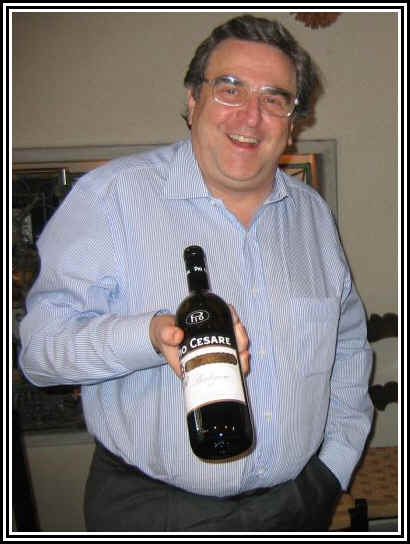
The late Pio Boffa...he was a larger-than-life character!
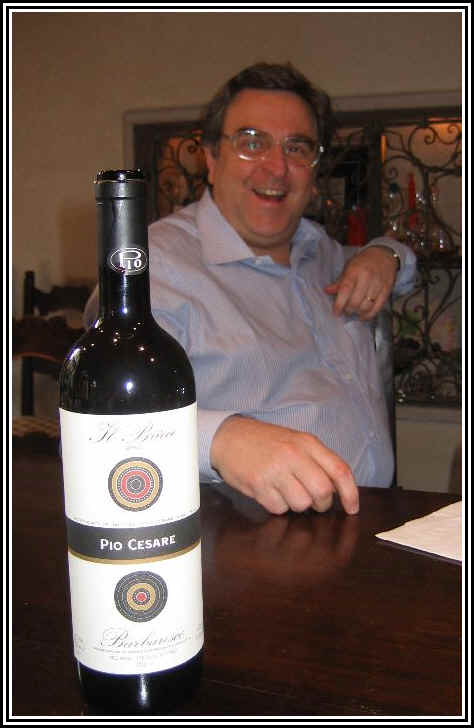
I had gotten to know Pio Boffa a little bit over the past couple of years
and viewed him as a bit of a modernist. His wines are good ambassadors
for the Langhe, as was Boffa (he traveled quite a bit). In the 2010s
the wines returned to a somewhat more traditional style of Nebbiolo, but
we appreciated the wines all the way along, frankly.

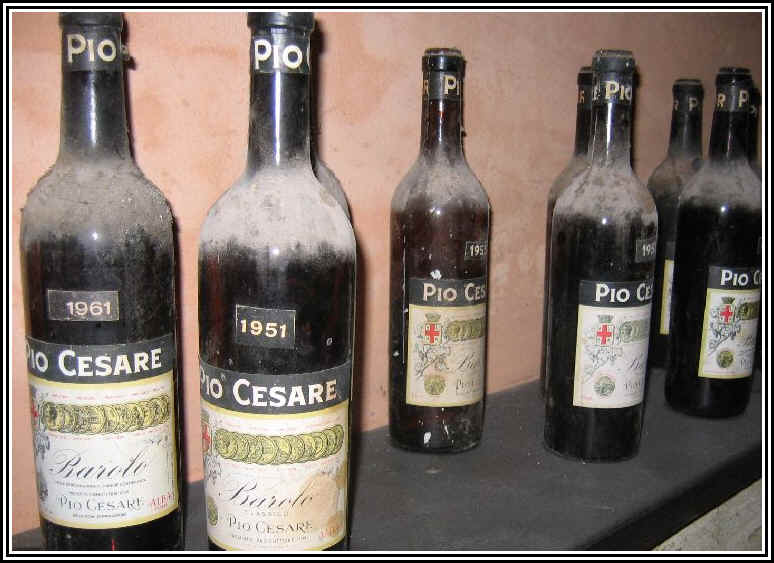
The current wines of Pio Cesare tend to be really nicely fruity
and moderately oaky. They are a good introduction to Barolo and Barbaresco
for drinkers of "New World" wines. You won't find these to be
rustic in any way, for example and the use of wood is recognizable. The
wines tend to be nicely structured and balanced to be drinkable at an early
age.
The cellars are modern and well-kept.


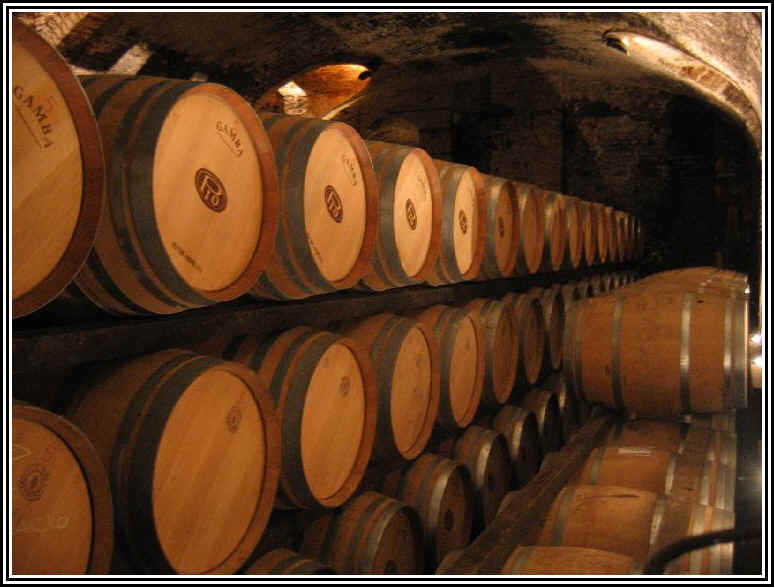


The late Pio Boffa pouring some wine at a dinner in the Roero region of the Langhe in 2008.

We have the 2014 Pio Cesare Barolo in stock. It comes from
8 sites around Barolo, with several vineyards in Serralunga and Monforte along
with Novello, La Morra and Grinzane Cavour. They do a 4 week maceration
which is on the traditional side of the spectrum, as is the blending of various
vineyards. Perhaps less traditional is the use of French oak, as the wine
was matured mostly in botti and a small percentage saw barrique
aging. As noted previously, the Barolo wines had displayed a fair
bit of sweet French oak a decade, or so, ago. This shows far more
restraint as far as the use of oak goes.
It's got good balance and moderate tannins as Barolo goes, so plan on enjoying
this by the mid-2030s as the wine is reaching its plateau.
Nice balance and rather elegant as 2014 did not produce the biggest Nebbiolo
wines.
Other Pio Cesare wines are available by special order. Just let me know
what you'd like and we'll make the inquiry.
-
Currently in stock:
2014 PIO CESARE BAROLO Sale $89.99 (750ml)
RENATO RATTI Pietro
Ratti has taken over the reins of this esteemed property from his late father and the
wines are better than ever. Pietro
Ratti has taken over the reins of this esteemed property from his late father and the
wines are better than ever.
Renato was quite an ambassador for the wines of
the Barolo area, making a map of the region and highlighting what he felt were the top
"vineyard sites" or "crus." Visit more than a
handful of cellars in the Langhe and you'll, no doubt, find Renato Ratti's
map of the area posted. We see this bit of 'art' work everywhere in
the Barolo region.
The winery is in the La Morra zip code and Ratti
produces very good and very typical wines from this region.
Though he's quite a progressive and modern fellow, Ratti has a sense of
tradition and makes wines which are in a classic style, but you'll sense and
"air" of modernity here. This is a cellar rooted in
tradition, but aware of modern conveniences such as electricity and such.
Years ago, as we discussed the notion of deeply-colored Barolo and
Barbaresco wines. Signor Ratti explained that he and his father
(especially) tried every sort of winemaking technique to enhance the color
of these Nebbiolo-based wines. "If you see a wine darker in color
than this," Pietro explained, "it's probably a wine that's not
entirely Nebbiolo."
A new cellar has been completed, built into the hillside and providing a
measure of natural cooling. From their vantage point in La Morra you can see a panorama
from Alba (and beyond) to the Serralunga valley, Castiglione Falletto and
south to Barolo and Monforte.

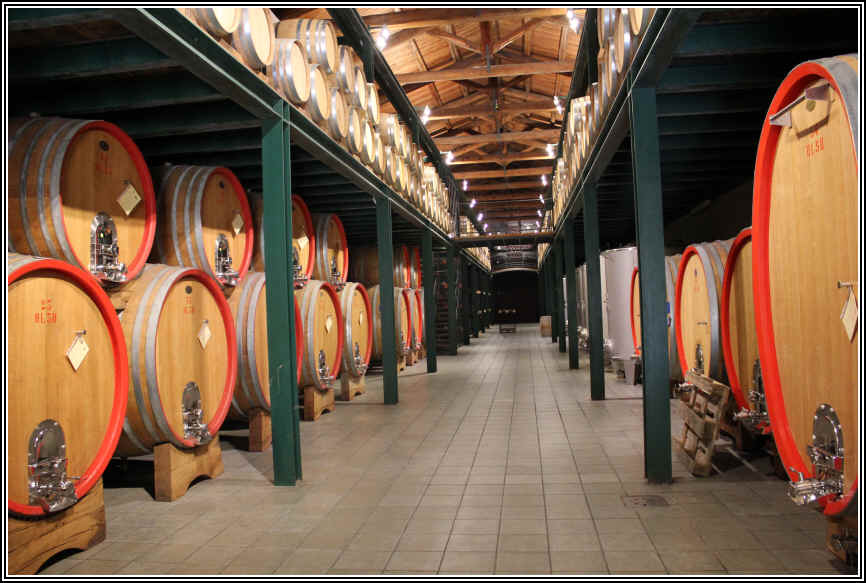
The cellar has impressive stainless steel, temperature-controlled
fermentation tanks.

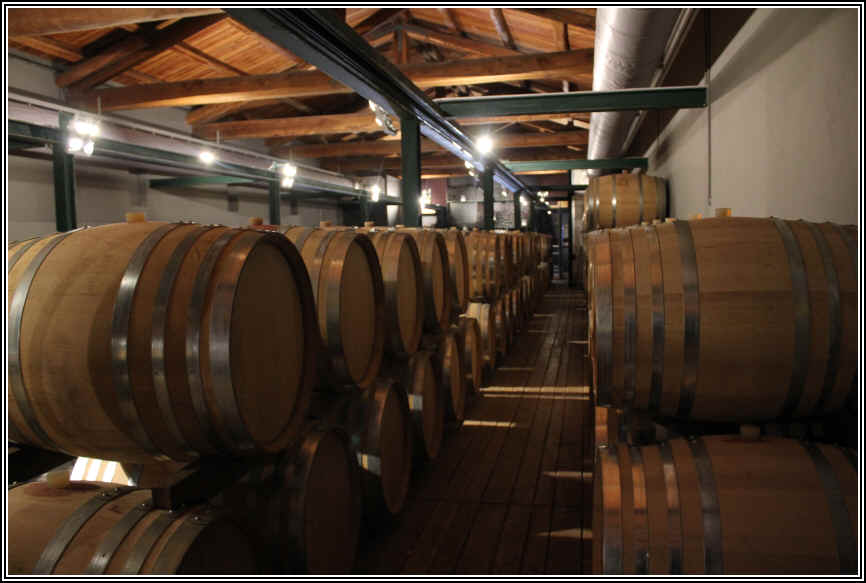
The wood-aging cellar features French oak
barriques, but also large wood to that their wines don't taste like
2-by-4's.


-
Ratti has had a series of national US
importers.
We recall telling Pietro the importer he had (ages ago) had inflated the
prices of the wines, we could not, in good conscience, offer them in the
shop.
He had seen his modestly-priced wines were quite expensive and he
eventually found another importer which was owned by a French winemaking
family.
The prices became more honest and we were delighted to have his wines in
the shop. They sold well, in fact.
After a few years with that company, he terminated his relationship with
them and signed up to be imported by the Gallo company called "Lux."
This is supposed to be a portfolio of deluxe wineries featuring fancy
wines.
We do not know what sort of success they will have.
The Ratti wines have been with Lux for about two & a half years at this writing and
we have never seen a sales rep to show any of the wineries in the Lux
portfolio.
The decision to not work with Gallo's new acquisitions was made easier
after we contacted a sales manager for Gallo regarding a California wine
they now have.
We would have continued working with a particular Cabernet which we
ordered each week from their distributor rep. But it seems there's
a hard and fast percentage of sales of that wine in restaurant and
retail accounts.
We were told they'd keep us in mind for future releases, but the current
one, available to certain stores but not to us, is being doled out with
care. Despite being a customer of this winery since its inaugural
vintage, we are no longer worthy of having their wine in our shop.
The day we were informed of this we made our daily visit to a local
grocery store and near the entrance we noticed this $60 bottle of
Cabernet was on display near a floor-stack of fresh mangos and one pound
bags of jelly beans!
That is the state of the current wine market...
...and until Pietro has a more comfortable importer, we will not have
the Ratti wines in the shop.
If you are in need of Renato Ratti wines, we can certainly special order
them for you. |
As for their wines:
Ratti makes a dynamite red called "Villa
Pattono," a blend this vintage of Barbera from near Asti, along with Cabernet
and Merlot. Matured entirely in new French oak....this is a
"Super-Piemontese" red, competing quite easily with those wines known as
"Super Tuscans." Unlike many Tuscan wines, this arrived here
for a price which the wine easily justified.
We opened a bottle of 1995 in the Spring of 2006. I happened to stash
a bottle and found it while rummaging around the back room. It was a
nice "old" wine.
Mature? Certainly.
Complex? To a degree.
Was it worth saving for so many
years? Probably not. The Villa Pattono wines made today are
probably best enjoyed when the wood is sort of fresh and cedary.
This had been a good seller for us, but as the importers have not been able to
find customers for it, Villa Pattono is no longer imported.

"Marcenasco"
is a name you will find on the Barolo of Ratti. They have three
bottlings, usually. One is the "simple" Marcenasco.
The other two are the "Conca di Marcenasco" and the "Rocche
di Marcenasco" wines.
I liked, for example, the 2003 Barolo called "Conca di Marcenasco." This
wine was a bit unusual, reminding me of
Barolo-Meets-Northern-Rhone-Syrah. There was an atypical character to the
wine that is reminiscent of some Côte-Rotie or Cornas wines when it was
released in 2007. We tasted this as it matured and it developed into
classic
Barolo...the spice notes are a bit subdued and the leathery Nebbiolo is
starting to shine.
The wines have been reliably good quality and we routinely taste these every
year when visiting Italy.
.
~~~~~~~~~~~~~~~~~~~~~~~~~~~~~~~~~~~~~~
-
In May of 2008, Pietro shared several magnums of wines, two of them
Barolo wines from unheralded vintages.

A 1987 Barolo, a 1993 Rocche Barolo and their 1997 Nebbiolo d'Alba were
shared by Pietro Ratti at a spectacular table in the Langhe.

The 1987 Barolo was the last vintage vinified by Pietro's father, Renato
Ratti. It was still quite alive and it blossomed nicely over the
course of an hour, or so. It was paired with oven-roasted kid goat.
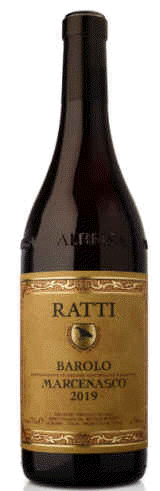
- The 2019 Marcenasco Barolo is a delight...medium+ body...some
red fruit notes and a touch of spice. It's matured in smallish
cooperage of 25 and 50 hectoliters...Earlier vintages have displayed a bit
more oak...Pietro seems to have pulled back a bit, but the wine is still charming
in its youth.
-
-
- Currently in stock:
2019 Barolo "Marcenasco" SALE $59.99

Now I understand why they make a wine called
"Conca."

A magnum of 1987...the last vintage vinified by Renato Ratti before he
passed away.
Tasted in 2008, this was a lovely wine...still showing a lot of vitality
and nicely complex!

Pietro Ratti in the Fall of 2009.
We took him to dinner in San Francisco and the 'surprise'
bottle of wine we had was his father's 1967 Barolo.
This was exceptional...still alive and complex, with leathery and tarry
notes.
-
-
A FEW PHOTOS OF
PIEMONTE
MORE PIEMONTESE WINES

|