|
|
STORE HOURS
Mon-Sat: 9am-6pm
TASTING ROOM HOURS
9am-5:45pm
Closed Sundays |
Prices Posted on our site are
subject to change without notice.
We are seeing our trade partners
increasing prices at a fast & furious rate.
(They're Fast and we're Furious.)
| |
More Piemontese Wines

- LUCIANO SANDRONE
 The
late "Mister Barolo" started his little enterprise back in
1977. We've been fans since his fantabulous 1982 vintage, a stellar Barolo marking a
new style and grace to winemaking in this region. The wines were unknown then and we
had little problem in acquiring the wines since they were unheralded. The
late "Mister Barolo" started his little enterprise back in
1977. We've been fans since his fantabulous 1982 vintage, a stellar Barolo marking a
new style and grace to winemaking in this region. The wines were unknown then and we
had little problem in acquiring the wines since they were unheralded.
-
You had to be "in the know."
Sandrone worked for another, rather large, winery in Barolo and he had the
urge to own his own place. His brother, Luca, is quite capable in the
vineyard and Luciano took care of the cellar.
Mrs. Sandrone, Mariuccia,
took care of vineyard or cellar work...
An old "liquor" man (Eddie Lefcourt) had started a small importing business and one
of the first wines he got his hands on was the Barolo of Sandrone. We
were delighted with the quality of the wine and quickly became the president
of the Sandrone Barolo Fan Club. A year, or so later, we actually
visited Sandrone and the family seemed perplexed that we'd made the effort
just to see the tiny cellar perched on a hill on the road up to the main
part of the town of Barolo.
-
-
-
The wines were much in demand and Luciano and Luca looked for additional
vineyard sources. I think the estate now owns 27 hectares of vines,
maybe more. After renting a cellar up the hill, today they have a
remarkable, state-of-the-art (and then some!) facility down in the flat
below the famous hill known as "Cannubi."
Luciano Sandrone died in January of 2023, but his brother and
daughter are still operating the family business and now Sandrone's grandkids,
Alessia and Stefano, are involved.
-
-

- The new "Castello Sandrone."
In the early 1980s, some people
railed against the "new" style of Barolo that Sandrone was
making. His wine was different. While so many people made
hugely tannic wine which was left in some sort of wood tank, cask or cement
vat, Sandrone had the idea of using smaller French oak. (While some
viewed this as "modernista" winemaking, Sandrone reminds people
that barrels the size of puncheons WERE, in fact, once the traditional size
of cooperage used for aging Barolo. And if not aging, then
transporting Barolo...)
Instead of
leaving the wine in wood and waiting to bottle it until the fruit was gone
or the wine was, perhaps, past its prime, Luciano bottled the wine
earlier. Suddenly Barolo had lost its "rusticity."
Here was a fellow making a brighter wine which was much more approachable in
its youth and which, as it turns out, still has rather good cellaring
potential.
Sandrone then received favorable reviews for the wines. Sales were
soon handled by a young, dynamic "ambassador," a fellow who
assembled a lovely range of Italian wines. Other Piemontese notables
in this "stable" included Domenico Clerico and Elio Altare.
They would all get together, from time to time, and share their winemaking
experiences. This was unheard of in the region, as most of the, then,
"older generation" viewed the neighbors as competitors. ((I
remember inviting another winemaker to come with me to visit a nearby winery
and I was told they could go only as far as the front door. "They won't
allow me to come inside."))
I'm sure there are some tasters who will view today's Sandrone Barolo as
being in the "modernist" camp. Yet we have found the wines,
once they've had sufficient time in bottle, change significantly. You
might be hard-pressed to taste some of the good vintages from the 1980s, for
example, and to say "Aha! This wine was aged in French
oak!"
I opened a bottle of Sandrone's delightful 1985 Barolo in the Spring of
2007. Classic Barolo...

Sandrone and his lovely daughter, "Barbara d'Alba", had come to San Francisco
on a tour of the U.S. market. I hosted a nice dinner and decanted a
prized bottle. The wine was a classic Barolo and surely any of the
"old-timers" from the Langhe would have immediately recognized the
wine was good Barolo.
We had a bottle of Sandrone's 1991 Barolo "Le Vigne" in, say, 2002
or 2003. Here was a wine from an unheralded vintage
and the wine was spectacular. It is important to point out why...It
seems to me that Sandrone was one of the first to really have a good sense
of the quality of the fruit he was vinifying. Like a good chef in the
kitchen, Sandrone seemed to know how much time to leave the newly-fermented
wine on the skins, how much time to leave it in wood, etc. Yes, you
will find vintage "variation," of course. But we have seen
the wines are consistently good here. That's another reason we're
fans.
Each vintage bottling tells the story of that year's growing season.
A great winemaker is sensitive to the vagaries of each year's fruit and
works to maximize the quality of the wine, no matter what cards Mother
Nature has dealt.

The winery is a remarkable showplace.

They have a couple of special rooms for the primary fermentation.

There's a lovely hall for bottling, labeling and case preparation.
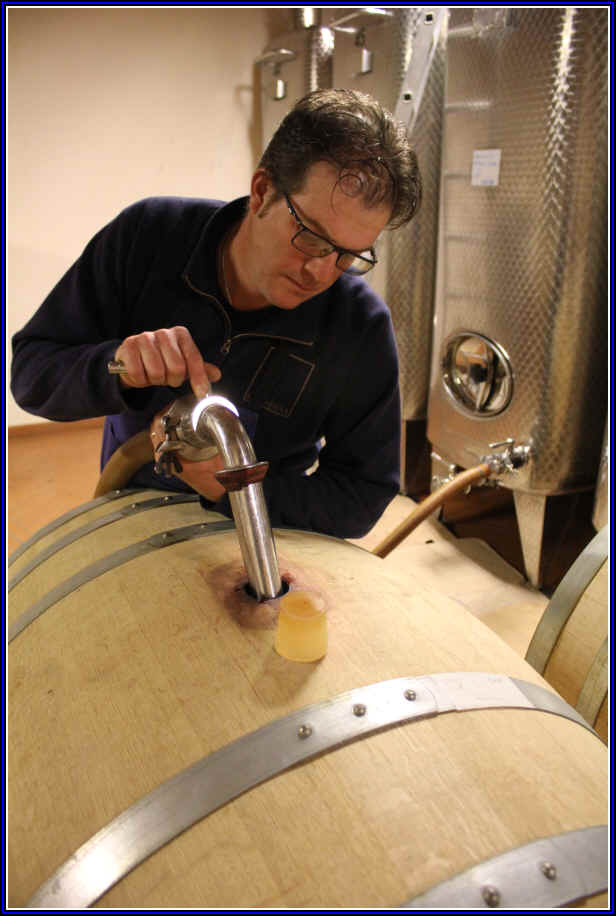
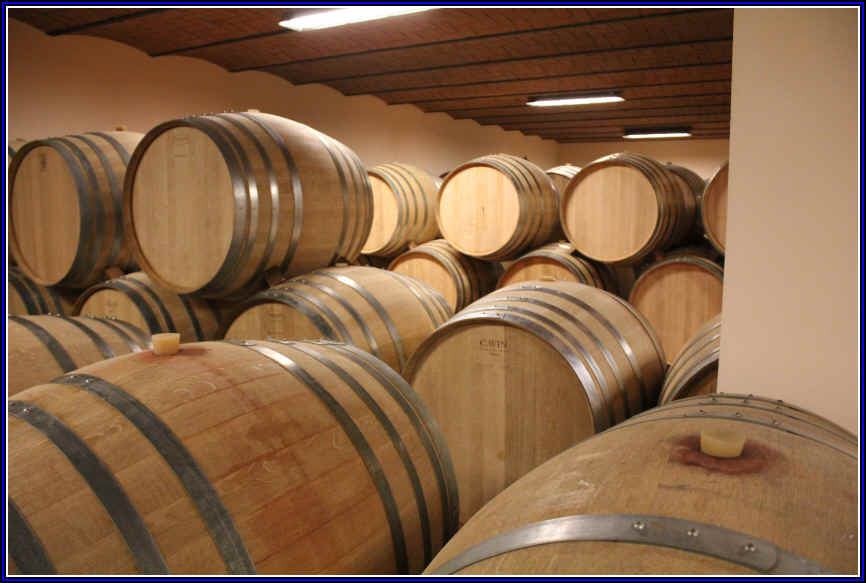
Downstairs in the "cellar," you'll find plenty of cooperage.

Sandrone seems to favor puncheons and barriques. What a luxury to not
have so many barrels stacked one on top of another on top of another!
Luciano is quick to point out the spaciousness of the facility is not for
future expansion, but for the ease and comfort of making the wines and
constantly making them better.
(If that's possible!)


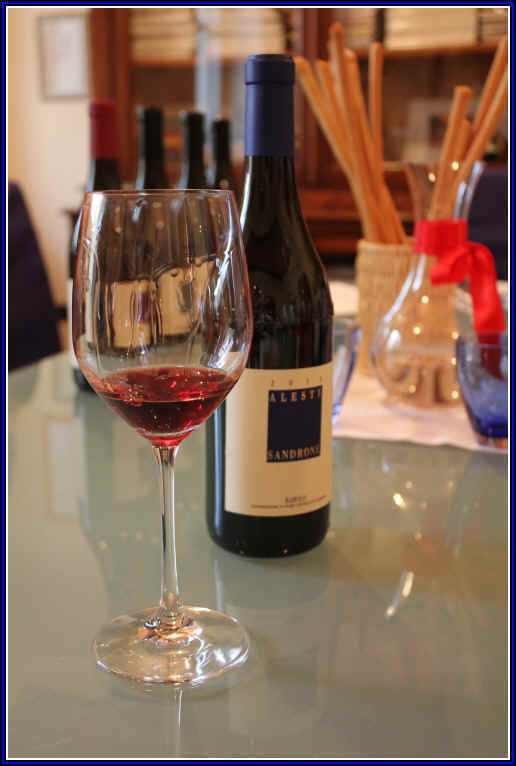
It's no longer called Cannubi Boschis...Luciano renamed his vineyard
"Aleste" for his two grand-kids, Alessia and Stefano.
This raised the eyebrows of the neighbors.
-
-

It's not all French oak puncheons in the Sandrone cellar...
-
The Sandrone family makes a nice range of wines. Two Barolo wines
head the list, one the famous single vineyard Cannubi Boschis and the other
is a multi-vineyard blend called "Le Vigne" (the
vines).
- Cannubi Boschis is produced in more limited quantities and
carries a higher price tag. It had typically the more profound and
complex bottling, but recent vintages have seen these wines hit a similar
level of quality.
We had tasted, for example, the 2013s and on first taste, preferred the Le
Vigne.
A couple of weeks later we tried the same two wines again and preferred the
wine made from fruit grown at Cannubi Boschis.
Sandrone sources Nebbiolo in sites near Serralunga, Castiglione Falletto, Barolo and Novello.
The Le Vigne has the Sandrone elegance and finesse.

Starting with the 2013 vintage, Sandrone has embarked on a mildly
controversial name change.
He's no longer calling the Cannubi Boschis Barolo with its original vineyard
name, but is now labeling the wine as "Aleste."
His two grand-kids are ALEssia and STEfano.

Some of the neighbors have wondered if the wine will be, in fact, actually
from Cannubi Boschis.
Sandrone insists the wine will be the same and from the Cannubi Boschis
site, but this change does allow them to use fruit from other vineyards
given the name "Aleste" is a proprietary designation.
We had suggested they use the Aleste name for their Le Vigne Barolo and
retain the famous Cannubi Boschis name for the wine which is the foundation
of the winery.
We pointed out that Romanée-Conti has not changed the name of its famous
vineyard, for example.
Collectors and wine aficionados know the Cannubi Boschis name as a
prestigious Barolo site and there are wine lists with numerous vintages of
Cannubi Boschis.
In 2017 when this Aleste wine is hitting the market, we were dining in a
nice little restaurant in Trentino and saw a Sandrone Barbera on the
list. We snapped a picture and sent it to Barbara Sandrone who
responded with a note to say hello to the sommelier.
We did.
He said he would like to buy some Sandrone Cannubi Boschis for his wine
list. We relayed that message.
"Oh, you must explain to him the change of name to Aleste."
We did.
"Oh my," he said. "Do you think Romanée-Conti would
change the name of its wine? Of course not. I can't understand
this."
The explanation of the name change, we suspect, will take years.
But the wine from the 2013 vintage is outstanding, no matter what you call
it...you can call it exceptional.
And this is normal for damned near every vintage.
The 2019 is currently in stock...remarkably good wine...typical of Sandrone
"perfection."
We sold a few bottles to customers who wanted a good Barolo and were
surprised when they returned a week later to buy a few more bottles.
Sandrone's wines are enjoyable in their youth and they age handsomely.

2024 SANDRONE DOLCETTO D'ALBA
Here is a wine, made by one of Italy's foremost vintners and it carries a
price-tag within reach of most wine drinkers.
The 2024 season saw a cool and wet spring, with things heating up
during the summer.
Then there were summer rains and growers had to pay attention to dealing
with mildew.
Overall it's viewed as a "good" harvest with numerous challenges
and so you can see Sandrone was vigilant in making a nice Dolcetto.
Berries on the nose and palate.
It comes from five vineyard sites in Monforte, Novello and Barolo.
Beautifully fruity...deep and medium ruby in color...very fine.
$28.99 (with case discounts).
You can enjoy this wine immediately and it's going to hold nicely for the
next year, or so.
We typically serve this at cool cellar temp, 55 degrees or so.

Barbera is also quite good here. Though you might expect a producer of
French oak-aged Nebbiolo to really oak the hell out of a Barbera, Sandrone's
is remarkably balanced. I was amused when we dined at the Villa Tiboldi in
Piemonte with Sandrone and he ordered a bottle of a Barbera d'Asti which had
more wood than you can shake a stick at! Yet in his own wine, the fruit dominates as
it is matured in puncheons, rather than small oak barrels. I find it far more close to the style of Barbera one finds
from Bruno Giacosa or the Mascarello winery (two stellar
traditionalists) rather than the someone woodsy Vietti or Coppo
style.
Sandrone also makes a very fine Nebbiolo from fruit grown in the Roero
region known as Vezza d'Alba. It's called Valmaggiore (Bruno Giacosa
makes a Valmaggiore bottling, too) and Sandrone's is matured in
puncheons. You might consider it a mini-Barolo, but the wine tends to
have more fruit and a nice measure of finesse.
Recent vintages have been good, but as the price for this is around the same
level as some seriously good Barolo, we don't have it in the shop at the
moment.
-
- They used to make a proprietary red called "Pe
Mol" (Piemontese for "peg leg," apparently a tribute to a
vineyard worker they have or had)...Though we had success with the Pe Mol
wine, the exporter didn't work to sell it and Sandrone finally stopped
making it.

Luciano Sandrone, Gerald and Barbara d'Alba.
- I suppose some people who like "old
style" Barolos, wines with gritty tannins and shrill, sharp edges, might have a tough
time enjoying such drinkable, graceful wines as Sandrone's.
His wines cellar handsomely. They show elegance and brilliance when
they're young. I find them nicely balanced, even when they're from a
tannic, well-structured vintage. Many winemakers dealing with the
inherently tannic Nebbiolo grape, have difficulty in managing the
tannins. Some wines take a decade or two for the tannins to resolve
themselves. We like some of those wines, of course, but appreciate
Sandrone who manages to find a point of balance virtually every time.

He was a real gentleman and an excellent winemaker.
- He remained a very humble fellow
for being as famous in his realm as Mick Jagger or Steph Curry are in theirs.
-
-
- Currently available:
2019 Barolo "Aleste" SALE $169.99
2017 Barolo "Le Vigne" Sold Out
2020 Barbera d'Alba $46.99
2024 Dolcetto d'Alba $28.99
2020 Nebbiolo "Valmaggiore" $49.99

Enjoying a sip of Franciacorta before lunch at Chateau Sandrone
in Barolo at the new facility.
Luciano is a big fan of sparkling wines!

2000 Le Vigne...showing well in 2007...still young and developing.
A bottle tasted in 2010 was in the realm of "exceptional." The
wine is still youthful, but was showing some nicely developed notes of the
Nebbiolo...very fine.

Sandrone has a nice "library" of older vintages which they release
when the wines are ten years of age for the Barolo bottlings and 6 years for the
Nebbiolo called "Valmaggiore."


Mariuccia and Luciano

Our friends Gaby and Norbert with Luciano in 2019
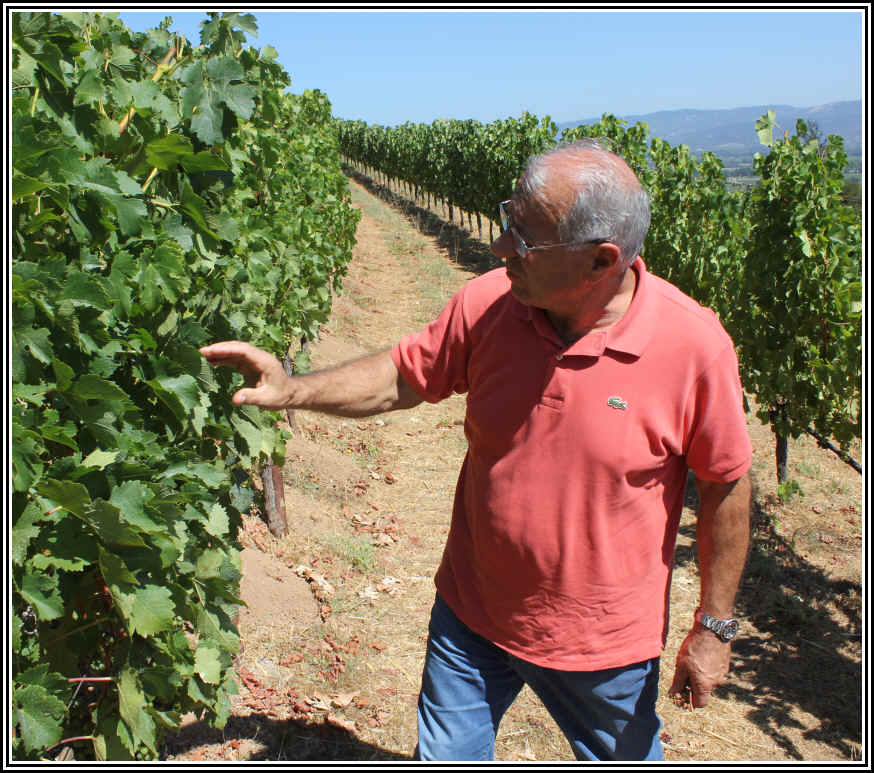
Luciano visiting the Napa Valley in 2013.
We had a look at the Harlan and Bond properties.
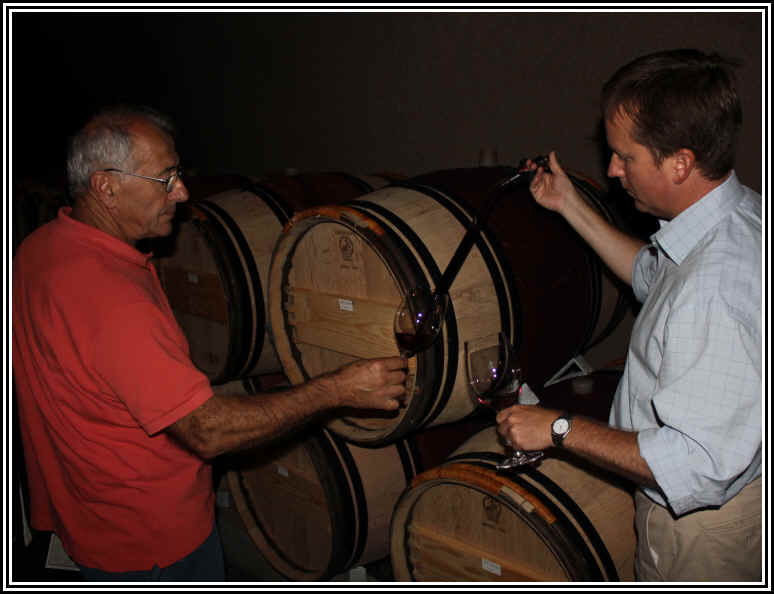

Checking the Cabernet vines at Napa's Opus One in 2013.

Alessia with her Nonno, Luciano.
These days she is the winemaker stepping into his rather large shoes.
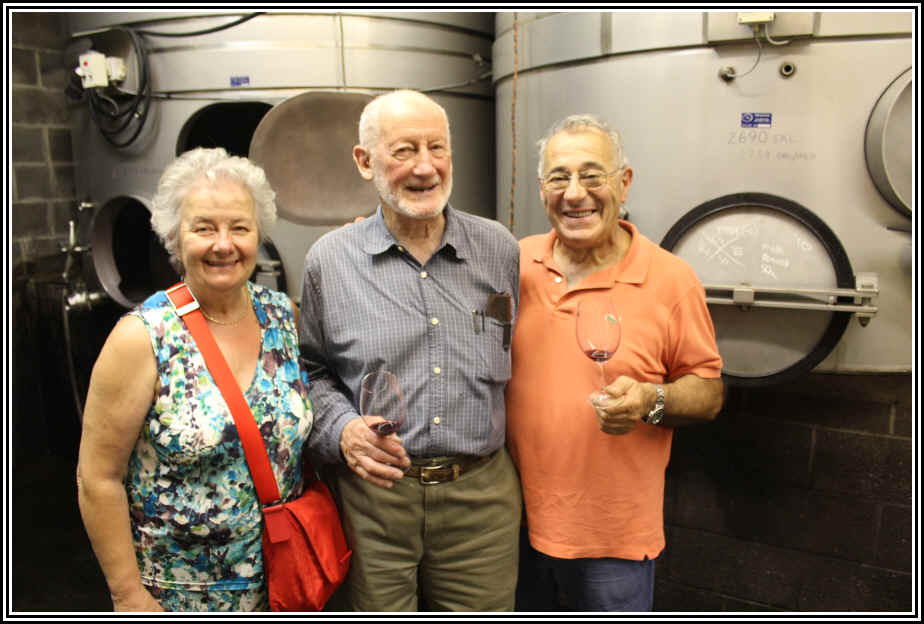
We visited the winery of Phil Togni and had a great time seeing the vines and
wines.
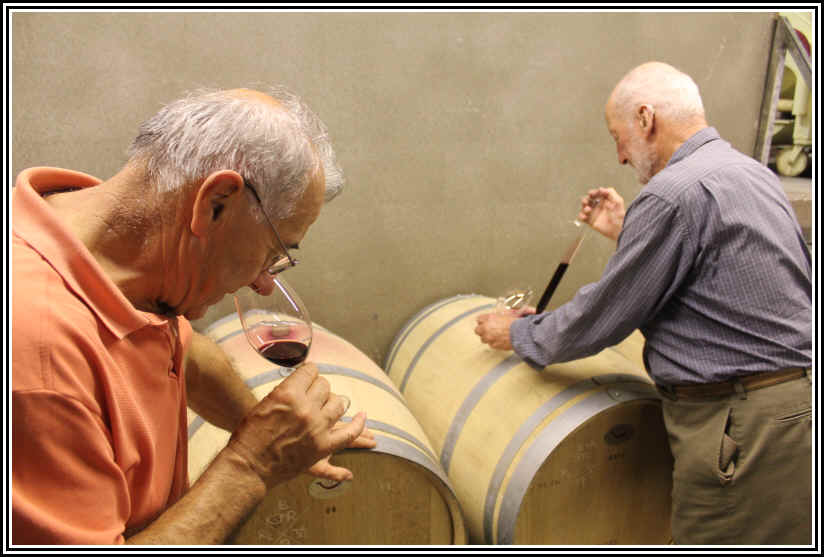

Tasting at Chateau Montelena.


-
-


- E. PIRA e FIGLI
-
-
-
- Pira was a famous name in
Barolo for many years. This guy, Luigi Pira, put the "piedi" in
Piedmont. Pira was a famous name in
Barolo for many years.
-
-
-
-
-

-
- He was the last guy to actually crush
the
grapes with his feet (piedi). The winery was sold by his
heirs shortly after Pira died (and not of "athlete's foot"). Sold to the
Boschis family, owners at that time of the larger Giacomo Borgogno winery, E. Pira e Figli is run by the
charming and attractive Chiara Boschis. While the Borgogno wines are very
traditionally-made, old-style offerings, we kept our fingers crossed for Chiara to produce
wines of greater intensity. Her early vintages, where she was getting her feet wet,
so-to-speak, were quite good.
Recent  wines
have been of a quality which challenges for a spot on the short list of top sources for
modern and exceptional Barolo. The Barolo is matured in French oak, so
they're not exactly traditionally-styled. wines
have been of a quality which challenges for a spot on the short list of top sources for
modern and exceptional Barolo. The Barolo is matured in French oak, so
they're not exactly traditionally-styled.
These wines seem to start out with tons of sweet
oak, but if given enough time in the bottle, they "return" to
displaying the real character of Nebbiolo from Barolo. That is, the
oak diminishes with time and the wine starts to exhibit the typical aromas
and flavors of old-styled Barolo. "Old styled" , not "badly
made".
-

-

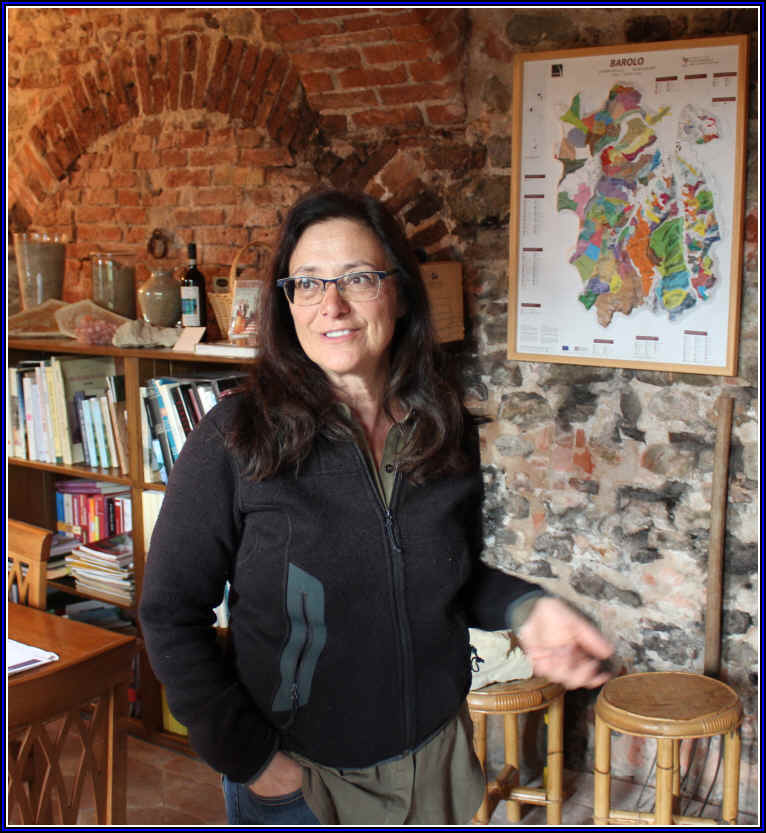
Chiara Boschis...May 2007

2007 Vintage Chiara
-
2019 Vintage Chiara

Chiara's niece Beatrice Boschis helps at her aunt's winery...
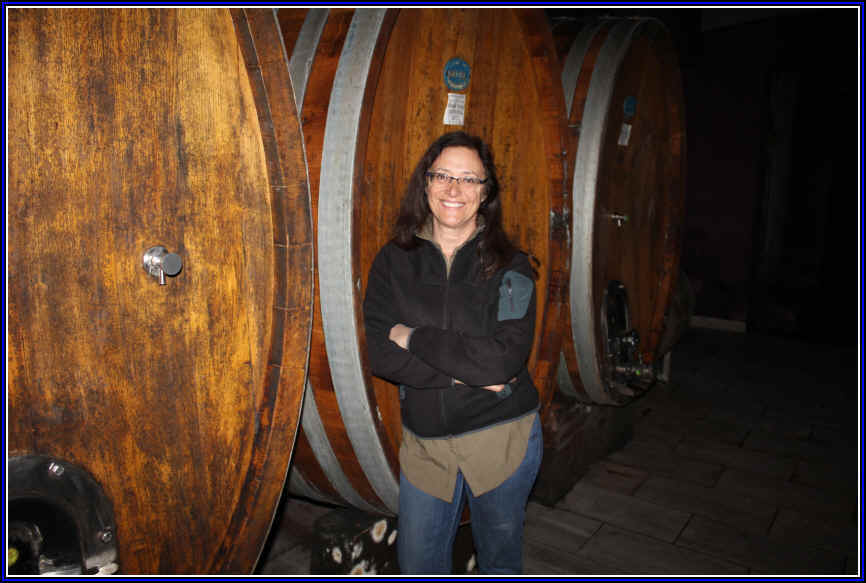
The cellar has some old-school, large wood these days.

And there are many small French oak barrels in the cellar, but the percentage
of new oak for the Barolo wines has been reduced.


-
-
The 2003 is excellent. I found it to be one of my favorite wines in a
marathon tasting of 2003 Barolo's. It showed magnificently in May of
2007...we had a bottle in a tasting and it showed well and a bottle on the
dinner table was even more enjoyable. We have had bottles from
time-to-time and the wine seems to have closed up a bit and has been
hard-edged and even more youthful than it was upon release.
We drank one in 2016...still a bit young!
- The 2012s were quite impressive.
We had the Cannubi...this wine shows a bit of muscle. But even more
muscular, perhaps, is the new bottling from Monforte, "Mosconi."
These will need time.
The 2013s are magnificent, as well. Very cellar-worthy and fine.
Her 2014s, a difficult year, fared beautifully, though they tend to be
over-looked by those clutching their vintage charts as some sort of guiding
light.
The 2015s are stellar. We like the depth and power of the Mosconi,
which has dark fruit and some sweet spice notes.
The Cannubi is remarkably restrained and elegant. It is a baby and
will blossom quite handsomely if cellared another decade, or so.
The 2016s were both magnificent.
The Mosconi is muscular and deep, while the Cannubi is its usual refined
self with sneaky tannins and structure that will allow it to unfold over the
next 10 to 20+ years.
The 2017 vintage had a number of wine-growing challenges...frost in
April...some high temperatures during the growing season and a decided lack
of rain. You might find some wines from 2017 to have a rather ripe
note or some stewed fruit tones.
These are the usual good work from Chiara Boschis.
Brava!
-
- Dolcetto and Barbera can be quite good here.
-
- ***********************
We were amused to read an article by an American wine critic who decried the
use of French oak barrels for Nebbiolo wines, contending it was a stylistic
mistake and that wines matured in barriques don't age well.
The article then had tasting notes of his top 20 wines from the 1998
vintage, tasted a decade after the vintage. He wrote a glowing review
of the E. Pira 1998 Barolo and termed the wine a "classic."
I suppose he did not know it spent a couple of years in brand new French
oak!
-
- ****************************
Currently available:
2017 BAROLO CANNUBI $139.99
2017 BAROLO MOSCONI $119.99
2022 DOLCETTO D'ALBA Sold Out

1961 Barolo, still resting peacefully in the cellar at the Boschis'
family's old winery, "Giacomo Borgogno & Figli" facility.
Photo taken by Gerald Weisl.

Decanting a bottle of 1982 Pira in 2017.
It was a nice old bottle that had seen better days.

We asked Chiara to pose
for a snapshot in front of a VinItaly stand for a winery called "La
Chiara."
She found this amusing and we took a picture.
2018.
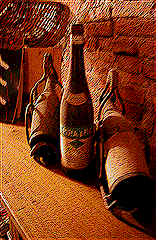 Old Bottles in the Pira cellar.
-

-
-

-
-
-
- PRODUTTORI del BARBARESCO
 There are
grower's cooperative wineries all around Italy, since so many people just
happen to have a tiny patch of vines on their property. These
enterprises sometimes offer advice on the cultivation of the fruit and then
accept the grapes, vinify the wines and market them. Some co-op
wineries produce really marginal products and others make wines which
challenge small, artisan winemakers for a piece of the wine market. There are
grower's cooperative wineries all around Italy, since so many people just
happen to have a tiny patch of vines on their property. These
enterprises sometimes offer advice on the cultivation of the fruit and then
accept the grapes, vinify the wines and market them. Some co-op
wineries produce really marginal products and others make wines which
challenge small, artisan winemakers for a piece of the wine market.
Today some of the best wines in the Alto Adige, for example, are being made
by co-op wineries.
The Produttori del Barbaresco has had a couple of incarnations. They
claim the place started back in the 1890s when the headmaster of the wine
school in nearby Alba gathered the fruit from nine growers and they made
wine in the cellar of his modest castello. This fellow, Domizio Cavazza,
seemed to understand that the Nebbiolo grape produced a different wine than
those made near the town of Barolo. He, in fact, chose to label the
wine as "Nebbiolo di Barbaresco," something remarkable in
its day. The fascist government closed the place in the 1930s and it
took until 1958 for someone to organize the local farmers and start making
wine again.
The leader of this bunch, back in 1958, was Celestino Vacca. They made
wines which rivaled any in Barbaresco and the winery was always cited as a
model for grower's cooperative wine companies.
The current manager of the place is Aldo Vacca, Celestino's son. We
first met Aldo when he was the dashing right-hand P-R man for another winery
in town, that of Angelo Gaja. Aldo studied viticulture and he's got a
good palate for wine, having grown up immersed in a wine culture. His
buddies are all winemakers and so, of course, he understood the need to
improve wine quality if the enterprise is going to continue to prosper.
And how it has!
The wines from many grower's cooperative wineries had typically been
"industrial" and lackluster. But if you visit cellars
in the Alto Adige, for example, you will find some seriously good wines
coming from the coops.
And if you check out those of the Produttori del Barbaresco, you will find
wines which give the independent, artisan estates a run for the money.
-

Aldo Vacca shows off an anniversary bottling of an old vintage of
"Vino Nebiolo"
Gianni Testa is the winemaker. He's a serious fellow and a capable
enologist. I think he, too, understands the need for good quality
wines and the protocol for making "traditional"
Barbaresco.

Signor Testa and his lovely daughter, Simona.
We see Aldo, from time to time, on our visits to Piemonte or on his visits
to California. He's a great character and a real pal. We usually
find the wines from the Produttori to be good quality, traditionally-made
wines. Typically the wines are a reliable choice if you're unsure about
which Barolo or Barbaresco to select from some small, possibly unknown
producer.
You have to also understand, though, the Produttori don't make Gaja-styled
wines. No French oak. No pushing-the-envelope winemaking
here. No "gobs of fruit." Just good, reliably-made
Nebbiolo.
They make a Nebbiolo Langhe, a bare-bones bottling of Nebbiolo. I have
been delighted by recent vintages of this easy-to-drink, simple, pleasant Langhe
red.
Then
there is the normal bottling of Barbaresco.
And a flock of
"Riserva," single cru Barbaresco bottlings. These can be
really nice and complex wines, but drinking them when they're less than ten
years old is a bit like putting a roast on the table half-way through the
cooking process. I've tasted through the line-up of single vineyard
wines on various occasions and when these are young, it's a tough
tasting. They're simply hard, fairly unyielding wines.
They don't issue the Riserva wines each and every year. Of course,
they make them in top vintages, typically. But I recall they skipped
one vintage some years ago not because the wines were lacking but because
the economy was such that selling them was going to a challenge. It
reminded me a bit of Porto producers who declare vintages with one eye on
the quality of the harvest and one eye on the world economy.
And they are not afraid to bottle single vineyard wines in the supposedly
"modest" vintages. Aldo has been quite vocal in pointing out
the wine from the allegedly less-than-stellar 2014 vintage. The basic
bottling from the Produttori was delicious.
The 2014 single vineyard wines are very good and are wines to set aside to
allow them to blossom. Drink the "normale" while you're
waiting for these...
And back to the "normale": I've tasted these over several
decades. From my humble perspective, I think the wine has evolved and
improved. This basic bottling has been reliably good for many years,
but it just seems like they're producing a wine with a bit more stuffing and
length. And I'd also say the wine is perhaps a bit more
approachable as a young wine than it was back in the 1970s...
The Produttori wine is a good bellwether for a vintage, too.
We enjoyed a wonderful old bottle of 1978 in Piemonte...It was deftly
decanted by our friends at Antica Torre in Barbaresco (right next to the
winery...but a bottle I'd acquired in a shop in Alba)...tasted in
2009: perfect garnet/brickish color...great nose, underbrush, mildly
truffley/earthy/leathery and with a little bit of 'bite'
(still).
The 2014 was very good. I'd first tasted it in a line-up of Barbaresco
wines and was pleasantly surprised at how nicely balanced it was. Good
fruit. And it has nice tannin. This is worth stashing some
bottles and allowing it to grow over the next decade, or so. It's
remarkably fine and on par with most good Barbaresco wines. You won't
find it to have the oak of some flashier producers, but it tastes like
Barbaresco and it doesn't cost a fortune.
And keep in mind the critics tabbed 2014 as a modest quality vintage, but it
was a challenge for those with Nebbiolo planted in lesser sites.
Barbaresco was perhaps less impacted than Barolo and if you taste the 2014s
from the Produttori you'd never imagine this was a difficult vintage.
The 2015 & 2016 normale are also very fine. These are showy
in their youth and have developed handsomely.
The winery is offering the 2022 Barbaresco as of the start of 2026.
This is a warm vintage, but they've done a good job making a balanced wine
and one that's drinkable early on. We expect it to develop nicely over
the next 5 to 10+ years, but it's certainly charming in its youth.
It seems the reason this is showing so well is they used all the fruit from
their various single cru bottlings in this main wine.
So there you have the secret of the 2022!
The various growers whose fruit is used in a particular "Riserva"
wine are honored by having their name on the back label...this is a bit of
an incentive for each Produttori affiliate to grow the best grapes possible.
-
A SMALL ANECDOTE
I was driving around Piemonte with my adopted
"family," the Currados from the Vietti winery in Barolo.
We had stopped for dinner at some way out-of-the-way restaurant far from
their home in Castiglione Falletto.
I cannot tell you anything of the food we had that evening, for it was
not the cuisine which was memorable. Instead, it was the
wine. We noticed a MAGNUM of Produttori del Barbaresco on the wine
list for, as they often are, a most tempting price. Even though we
were but four or five that day, we asked for the magnum of 1978
Barbaresco. The owner returned to our table a few moments later,
informing us this was his last magnum and cautioning us it was "in
the cool cellar" and would probably be too cold for to
enjoy.
I found this amusing, since we like red wines served at cool cellar
temperature and enjoy watching the wine blossom in the glass as it airs
and warms.
We were not dissuaded from our desire for this wine and the owner,
begrudgingly, brought out this bottle and decanted it for us.
"Alfredo," I said, "I think the proprietor is a bit sad
to 'waste' this bottle on us."
"Anch'io. Lo so" he replied (Me too. I
know.)
In any case, this bottle far outshined the meal that evening. The
color was perfect for a 20-something year old bottle. The
fragrance had that perfectly haunting bouquet Nebbiolo can acquire with
proper cellaring. The flavors were unusually well put together and
the finish lingered for quite a while. I can't for the life of me
recall the menu...just the cramped table and the large decanter,
"jug" of wine and some great friends. Oh, and we shared
a glass with the sad owner of the restaurant and, I can tell you, this
brought a twinkle to his eye and a smile to his face as he said
"goodbye" to an old friend. |
Currently in stock:
2022 PRODUTTORI del BARBARESCO
"Barbaresco" SALE $45.99
We may have a few bottles of some Cru wines from 2015 and 2016...stop
by and ask.
-

A magnum of the 1990, sporting a special label from a by-gone era...

A double magnum of the 1982 Barbaresco, the last remaining bottle in the
cellar at the winery.
It was magnificent...and had matured beautifully.
-


Aldo Vacca in 2018 showing off wines from the 2014 vintage.
Good wines, too, by the way.

Aldo Vacca in 2019 showing off the 2015 Pora.
Damned good!

-

-
-
CASCINA VAL DEL PRETE

The Roero region does not receive much attention from fans of Italian, or more
specifically, Piemontese, wines. The area has long been known to those
in the Barolo and Barbaresco appellations as many wineries bought grapes from
the Roero to augment their own productions. If winemakers in Barolo knew
the fruit from the Roero to be of good quality, perhaps wine drinkers should
explore their options in the Roero.
"We are Sonoma while Barolo and Barbaresco are the Napa area of
Piemonte." claims winemaker Mario Roagna of the Cascina Val del Prete.
Viticoltore Mario Roagna, whose mom Carolina and father
Bartolomeo (Lino to his friends) bought this estate in
1977. They'd been share-croppers of the property, so they were
well-acquainted with the land. Realizing the area offered great
potential for winemaking, Lino took out some of the other agriculture (grain,
I think) and replaced it with grapevines.
Roagna and his brother Luigi have been organically farming the vines in this
marvelous amphitheater. Mario explained he's happy with his decision to
cultivate in a biodynamic fashion.
Now they're joined by Mario's son Giovanni, who's a sharp fellow, by the way.
-

- Mario Roagna shows off the roots of the vegetation they plant in the
rows between the grapevines. "These roots add a lot to the soil
and actually 'work' the earth for us so it's quite an efficient
system. We like to sow seeds of favas and poppies . Some people
look at these as weeds, but they bring oxygen to the soil and this is very
beneficial."

These rolling hills are gorgeous. The building down below with the red
roof is the winery.
We've tasted the Val del Prete wines regularly over the years. They are routinely very good and easily worthy of
comparison with wines of more famous estates in the Barbaresco and Barolo
regions.


Oak plays a prominent role in the wines of Cascina Val del
Prete.
The wines, though, have a nice balance of fruit and wood.
They used to make an unusual style of Arneis, giving the wine a pass in
oak. They've changed to a more traditional style and we find it to be
nice, but not different from others. I can order that for you, as we do
not have it in stock.
Our other selection from Cascina Val del Prete is their
exceptional "Roero" wine, a red that's made from Nebbiolo. Now,
they make a "Nebbiolo d'Alba" which can also sometimes be sold as
"Roero." For the Roero appellation, the wine might have a drop
of the white wine Arneis in it...but the distinctions and differences are foggy.
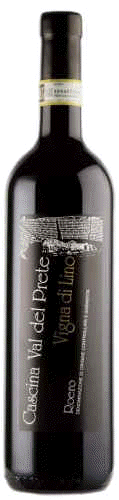
In any case, the 2019 "Roero" that's labeled as "Vigna di Lino"
from this vintner is excellent.
The soils are sandy and this apparently means the wines tend to develop a bit
more quickly than their cousins from Barbaresco and Barolo. Cascina Val
del Prete's 2019 Roero is very showy, having dark berry and cherry fruit along
with nice oak. It's a mildly cedary, woodsy red wine, so pairing it with
grilled or roasted lamb makes for a good match. The tannins are modest, so
we suggest drinking this over the next 5 to 8 years.

We're also enchanted by their 2016 Barbera d'Alba Superiore
"Carolina." It displays a bit of dark fruit and a mildly woodsy
tone, too.
Quite drinkable now and well-priced, in our view.
-
Currently in stock:
2019 CASCINA VAL DEL PRETE ROERO "Vigna di Lino" SALE
$44.99
2016 CASCINA VAL DEL PRETE BARBERA D'ALBA Superiore
"Carolina" Sold Out

Springtime in the vineyards of Cascina Val del Prete.

Mario tastes wine while his kid is curious to see who's coming to taste in the
Roero region...
2008


-
VIRNA
- The name
"Virna" is a relative new-comer on the Barolo scene, but the
name "Borgogno" is an old one.
Actually, there are a number of producers with the Borgogno name, so this
branch of that tree now carries the name of the winemaking daughter of
Lodovico Borgogno, "Virna" Borgogno.
Virna and her sister Ivana run this property, one that's been well
under-the-radar of most Barolo connoisseurs.
Their Pop launched his winemaking career around 1950 and began bottling
wine a decade later. Now the two daughters have a brand new cellar
on the "low" road to Barolo, right next to our friends at the
Luciano Sandrone winery.
The estate comprises something like 12 hectares of vineyards.
Virna appeared on my radar screen a decade ago and I was really
impressed with their "cru" Barolo wines. One is from
Cannubi Boschis and the other is a two vineyard blend of Preda and
Sarmassa. The wines of the difficult 2003 vintage were really good
and the 2004s were exceptional, as well.
Over the years we've mostly enjoyed their wines. There was a
vintage, some years ago, which I thought had some issues.
I told Virna and Ivana I thought there was an issue with those wines and
suggested the wines be sent to a lab for analysis.
After that they routinely ask me to taste their current crop as I was more
sensitive to the quality of the wine that were they.
I had the pleasure of re-tasting the Barolos I had thought were a bit odd
and have to say the wines were showing better (in 2017 at 10+ years of age).
A local importer told me he was looking for a second producer of Langhe
wines and I suggested he check out the Virna wines. And he did and
he felt the wines were well-farmed and well-made. Of course, the
price of a bottle of Barolo can be daunting, but, having tasted the wines
he told me he was going to bring in a few cases even though finding
customers for the wine would be difficult in a weak economy.
"The wine is really good and it's only going to improve." he
said.
Virna has a new importer here in California and I suspect he, too, is
thrilled by the current line-up of wines.
-

We currently have a good 2019 vintage Barolo.
This bottling is labeled as "Noi." or "us" in English.
It comes from two
sites in the town of Novello from vines planted between 1970 and
1980. It's more in the "old school" style,
though Virna gives this something like 10 to 12 days of skin contact
(instead of the traditionalist's 30+ days) so
it's not exceptionally tannic. The wine goes into large Slavonian oak to
start its maturation and remains there maybe 2 years. Then into
bottle and from there, you're in control.
The wine has mild tannins and classic Barolo fragrances...a touch of rose
petal, red fruits and a touch of a spice note.
We received a few bottles of the very fine 2021 vintage of "Noi."
-

The 2018 Cannubi Boschis from Virna was exceptional. Yes, it's still
young. But it is certainly possible to enjoy this now, especially
with an hour+ in a decanter to air.
The vineyards are planted with the Lampia clone of Nebbiolo and they went
into the ground in 1970. The grapes were crushed and put into tank
where they fermented for about 12 days before pressing. The wine
goes into puncheons and Slavonian oak before being assembled/blended and
then bottled.
The 2018 is a firm, well-structured vintage.
In visiting Italy in early 2018 we tasted many 2014s. The pundits
had been quick to say it's not a good vintage but, frankly, we did not
taste one "bad" wine. We are sure that 20 years ago this
sort of challenging growing season would have produced some sketchy wines,
but the level of competence throughout the region is very high.
The wines of Virna were amongst the most impressive we tasted.
Kudos to Virna for making some really expressive wines in a vintage many
will downplay.
But good vineyard sites, well-tended, can produce some profound wines and
that's what Virna had to offer from the 2014 vintage.
She has certainly gained a measure of fame over the past 10 to 15 years
and is far more visible on the radar of many Barolo aficionados.
-
-
Currently in stock: 2019 VIRNA BAROLO "Noi"
SALE $39.99
2018 VIRNA BAROLO "Cannubi" SALE $59.99
-
-

Virna uses small French oak as well as traditional Slavonian cooperage
for its wines.
-

In Virna's kitchen...good Piemontese red wine and good Piemontese pasta.

Ivana shows off her sister Virna's handiwork!
-

The late Luciano Sandrone with his next-door neighbor, Virna Borgogno in
2019.

Virna and Ivana Borgogno in the cellar--2019.


-
-
-
-
-
-
More
Piemontese Wines

|