CHARDONNAY

Tasting Chardonnay

Chardonnay vineyards in Sonoma.
The word "Chardonnay" has become synonymous with
"white wine" here in California. People seem to buy virtually anything
labeled "Chardonnay", whether the wines actually taste like Chardonnay or not.
In fact, I often wonder whether the average bear can identify the
character of Chardonnay. This is because many wines produced in California are
subjected to so much oak, either in the form of real barrel aging or some sort of oak
"flavoring" (new staves being introduced into a barrel or tank or oak chips or
sawdust being added -- the laws don't require a winery to disclose this on the
label) that an unwooded Chardonnay doesn't "taste" like Chardonnay to Yogi or
Boo-Boo. Similarly, I have noticed that many tasters describe other white wines as
being "Chardonnay-like" when these are dominated by wood.
The Chardonnay grape was not treated like royalty until a few years ago. Old-timers
such as Inglenook, Christian Brothers, Beaulieu Vineyards and Charles Krug made simple dry
white wines of Chardonnay grapes. The Wente Brothers winery was thought to be at the
vanguard of Chardonnay production, making a fresh, non-oaked dry white wine. In those
days, Chardonnay was thought to be a relative of Pinot Noir and was routinely called
"Pinot Chardonnay." It is, as it turns out, not related, so it's now
called "just" Chardonnay.

The
first really important work in marrying oak with Chardonnay in the traditional style of
France's Burgundian winemakers started with the Hanzell winery in Sonoma. This was
back in 1957, when James Zellerbach imported French oak barrels for the aging and
maturation of his Hanzell wines. Wonder of wonders! Oak!!!
It's taken many years for winemakers to learn how to use oak in making wine. Some of
them use oak as a crutch, propping up weak, thin wines and overloading them with wood.
Others employ a combination of wood and residual sugar to give character to wines
which are malnourished, wimpy wines. Many of these are quite popular, even
"scoring" highly with those who claim expertise in judging wine.
McDonald's hamburgers are quite popular, too, but few would say those are the best
examples of beef on the planet.

We enjoy a nicely oaked Chardonnay---don't get me wrong. I have been
accused of liking the most woody tasting wines. I cite Napa Valley eno-scribe Bob
Thompson who once wrote something like "My parents marveled that, as a boy, I
ate the fruit and not the tree." He was poking fun at
those who prefer Chardonnays with so much wood that determining if the beverage was
actually made from grapes is impossible.

The Chardonnay grape finds its home in France's Burgundy region, though it also is
cultivated in Champagne. In Burgundy's Cote d'Or, the major appellations of
Puligny-Montrachet, Chassagne-Montrachet and Meursault account for the top wines, but
other villages turn out good wines, too. The best Cote d'Or producers barrel ferment
the juice, using, at least, a percentage of new oak cooperage. The wines are often
aged on the spent yeast and this sediment is stirred in barrel, contributing a toasty,
smoky element to the wines. As the juice tends to be rather high in acidity, most
winemakers induce a secondary fermentation (called a malolactic fermentation). This
reduces the acidity and makes the wine rounder, creamier and somewhat buttery in
character.
California vintners make a full range of Chardonnays. At the low end you'll find
wines from the "hotter-than-hell" Central Valley where tonnage is high and the
intensity of character is low. On the higher end, you'll find wines from cooler,
coastal climes, from low-yielding vineyards which can be sublime. Some wineries make
light, crisp, "simple" Chardonnay, while others attempt to emulate the top wines
of Burgundy.
Some winemakers liken Chardonnay to a blank canvas. The character of the
Chardonnay grape is dependant upon its origins, clonal selection, soil type, exposure,
etc. The "seasonings" bestowed upon it during its maturation (oak,
secondary fermentation, etc.) further determine the character of the wine. Some old
clones of Chardonnay display a mildly appley note. Newer ones seem to have a more
tropically-fruity quality.
Diversity and individuality are what make winetasting fun and challenging. Don't
fall into a rut! Be adventuresome and experiment with Chardonnays from
different regions and unknown producers.
Current BEST BUYS


FOXGLOVE "Central Coast"
CHARDONNAY $15.99
- The Varner brothers offer a couple of good value wines under their
Foxglove label. This comes from Santa Barbara County grapes with
about 3% from Paso Robles. No oak...stainless steel fermentation and
it's a bit less than 14% alcohol.
It's been a rather popular bottle this year as it's well-priced and it
tastes like Chardonnay without residual sugar or fake butter notes.
-

Jim and Bob Varner...
They don't look related, do they?
;)

-
-
-
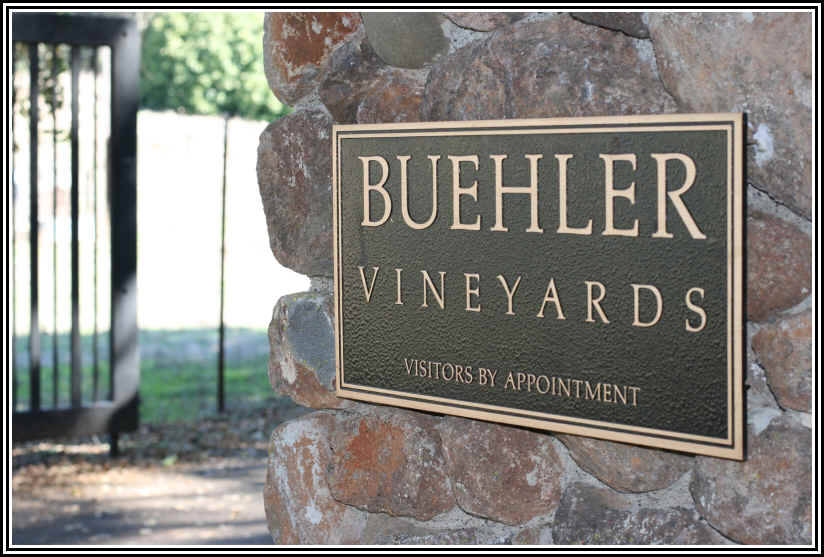
BUEHLER VINEYARDS Sonoma CHARDONNAY
SALE $20.99
- A fellow who lived in Hillsborough, up the hill from Weimax, purchased a
nice little property some 2 miles from the old Heitz Cellar on Taplin
Road in St. Helena. That's as the crow flies and you'd some 20
minutes by car, traveling about 8 miles.
John Buehler Sr. bought the property in 1971. The place encompasses
about 300 acres but maybe just 50 are cultivated with vineyards.
It took until the 1978 vintage for them to dip their toes in the water and
make some wine. Then in 1982 they hired the now-famous Heidi
Peterson...now Heidi Peterson-Barrett.
She stayed with them through the 1988 vintage...she is now a very famous
winemaker and consultant for numerous wineries.
It's an old-fashioned, off-the-beaten-path winery and, unusual for Napa,
they have old-time pricing and don't ask ridiculous prices.
It's too hot at the winery to grow good Chardonnay, so they get fruit in
Sonoma's Russian River Valley. They leave the just-fermented
wine on the spent yeast sediment and stir this periodically to give it a
bit more complexity. The wine undergoes a full malolactic
fermentation and it's dry...Mildly creamy and it sees a tiny bit of French
oak.
This is remarkably good and it's well-priced. You'll pay more for a
winery visit in Napa than for a bottle of this!
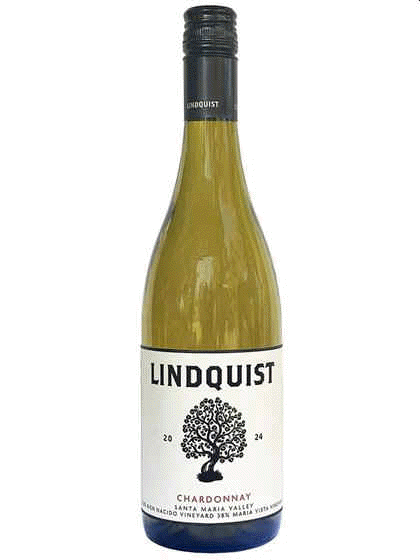
LINDQUIST 2024
CHARDONNAY $26.99
Winemaker Bob Lindquist has been a long-time fixture in Central Coast
winemaking.
He and his buddy, the last Jim Clendenen, shared a winery with Clendenen making
Au Bon Climat wines and Bob producing his Qupé wines.
Lindquist was a founding member of California's Rhône Rangers as he pioneered
Syrah and Grenache wines.
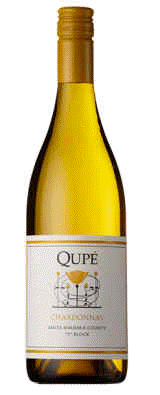
His Burgundian renditions of Qupé Chardonnay had been hugely popular here in
our little wine emporium and we had a floorstack with a sign that had an old
Challenge Butter box on it to indicate the wine was somewhat buttery in
character.
Bob would encourage the Chardonnay to complete a Malolactic Fermentation,
converting the tart, tangy, appley malic acid to convert to lactic acid,
softening the wine and creating that buttery element.
We recall on customer telling us they could not buy such a wine because they're
allergic to dairy products!
Bob needed funding and sold a share of the brand to an investor named Charles
Banks, a finance guy.
Banks had assumed full ownership but got in hot water in his financial
consulting business, apparently defrauding clients.
One client was former NBA basketball star Tim Duncan.
Banks also owned Mulderbosch winery in South Africa and the famed Napa winery,
Mayacamas Vineyard and Winery.
As a convicted felon, Banks spent several years behind bars and cannot own
wineries as a result.
Bob and his wife now offer tastings in Arroyo Grande while the wines are made in
the Clendenen-Lindquist facility in Santa Maria.
The 2024 Chardonnay comes from two sites in Santa Maria, predominantly the Bien
Nacido Vineyard and another site about 5 miles west.
Bob has a good recipe for this wine, as always:
The grapes are whole-cluster pressed and the juice is chilled overnight, before
it goes into French oak.
The wine is fermented in barrel with maybe 25% off them being brand new.
It undergoes a malolactic fermentation in wood.
Bob's been using barrels from the famous François Frères, a barrel builder
whose cooperage is so in demand that they actually allocate them to long-time
supporters. A little Burgundy winery called the Domaine de la Romanée-Conti
uses wood from the same cooperage and these contribute a terrific fragrance and
flavor to the wines.
The DRC wines sell for thousands of dollars and we're able to offer Bob's
Chardonnay for $26.99.
It's $38 at the winery tasting room.
Currently in stock: 2024 LINDQUIST Santa Maria Valley CHARDONNAY
$26.99

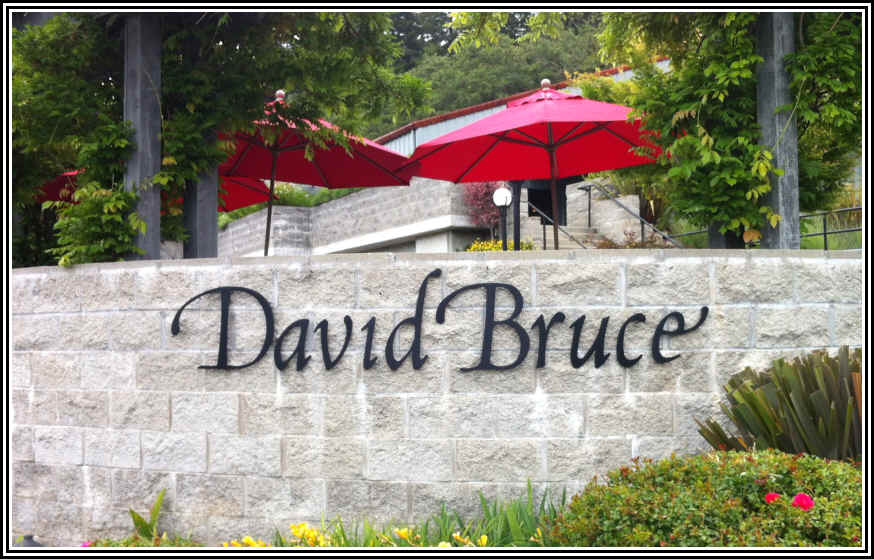

DAVID BRUCE WINERY 2023 Santa Lucia
Highlands (Monterey) CHARDONNAY SALE $22.99
- Dr. David Bruce was a Bay Area dermatologist who'd been bitten by the
wine bug ages ago. He was making wine in the Santa Cruz Mountains in
the 1960s and some of his wines caught the attention of local wine
aficionados.
Some of his wines were, uh, interesting.
Others were a bit too interesting.
In those early days he dabbled in making "White" Zinfandel, a
wine which we recall as being more of a brass to brown color than as a
white or pink wine.
Many of his wines were unfiltered resulting in hazy and cloudy wines, a
far cry from the polished wines one could buy from Louis Martini, Wente
Bros. or Charles Krug. Bruce's was a labor of love and every once in
a while a wine garnered the attention of aficionados.
-

His Chardonnay was selected for inclusion in the now-famous "Judgment
of Paris" tasting where Chateau Montelena Chardonnay and Stag's Leap
Wine Cellars Cabernet bested the fields in their respective flights.
The David Bruce Chardonnay finished last in that 1976 tasting.
Dr. Bruce passed away in 2021 at the age of 89. These days the
winery is owned by a Michigan college: Hillsdale
College. That's a bit unusual, no?
The winery had been making reliably drinkable wines in the early 2000s and
these days they on a good path in terms of quality.
They lost a couple of vintages due to local wildfires, but they rebounded
and have been doing well for a few years now.
Their 2023 Chardonnay from Monterey's Santa Lucia is a gem at our $23 sale
price. It's dry and mildly creamy with a bit of pineapple spiciness
and vanilla from its maturation in small oak barrels. By the way, if
you visit the winery this will have a price tag of $39.
They're now making a number of more spendy Chardonnays and Pinot Noirs,
but the entry-level bottlings offer the best value in our view.
An old bottle from the early days at the David Bruce Winery.
-
OKAY...NOT FROM CALIFORNIA, BUT GOOD
CHARDONNAYS:

-
LAMBLIN & FILS
- We've long had this little French white Burgundy stacked by the case in
our shop. It comes from the Lamblin family in France's Chablis
region and, as you might expect, it's styled along the lines of a crisp,
mildly flinty white wine.
You won't find any sweetness here and it's not an oak aged wine, either.
Nothing fancy but for a really solid weeknight Chardonnay, this is the
house favorite of many people in our neighborhood.
-
Currently in stock: LAMBLIN 2023 BOURGOGNE BLANC Sale $17.99


-
DOMAINE TALMARD
- A few years ago we stopped in to see the Talmard winery as we were
visiting Beaujolais and Macon. Monsieur Talmard was blown away to
have someone come 6000 miles to say hello, see the place and have a sip of
Macon. Most of his visitors come from within a 25 kilometer radius
and they carry away bottles and cases of wine.
"Why did you come visit?" he asked.
I explained that we've been selling his lovely little Chardonnay for
several decades and as I was traveling through the region on my way to
several other wine regions, I simply had to visit this font of
Macon. Well, we were also hanging out with friends from the Macon
region and dining together.
-
- "But there's nothing to see." he said. "It's just
some tanks, some bottles and a non-descript winery building."
-
-
- We told him we'd sold hundreds of cases of Talmard Macon and I just
wanted to say "thanks" for making a good wine and offering it
for a modest price.
Every year we taste Talmard Macon-Chardonnay and it's routinely a
delight. Nothing fancy, mind you, but it's solid, easy-to-drink
Chardonnay. And affordable. Talmard is not getting rich making
this wine and neither are we, as we sale-tag it in hopes people will want
to discover other French whites.
-
-
-
Currently in stock: TALMARD 2023
MACON-CHARDONNAY $17.99
-
-

That may be the only oak barrel in the cellar...and it's used as a table,
not for aging wine.
-
-


Comtesse Marion is $13.99 and comes from the south of France...no oak, but it's
beautifully aromatic and appley...easy drinking and we've been seeing numerous
case purchases by customers who've enjoyed a bottle or two to start...
It's from the Domaine Preignes le Vieux, some 31 southwest of Montpellier and
some 9 miles east of Béziers, well off the beaten path.
The fortress pictured above was built in the early 1200s.
The property was acquired by the Vic family in the early 1900s.
They have about 270 hectares of land, much of which is planted with vineyards.
These days the place is run by Aurélie Vic and her husband Jérôme.
She's the winemaker, having studied enology years after getting her degree in
chemistry (and doing clinical research in another field).
The Chardonnay grape can produce a rather neutral, bland wine if it's not
properly farmed. Chances of finding a good, non-oaked Chardonnay from the
Languedoc, where vineyards are often pushed for high yields are pretty small.
But this Comtesse Marion wine is remarkable as it displays the classic
apple-like fruit of Chardonnay with a pear-like tone, too.
Currently in stock: 2023 COMTESSE MARION CHARDONNAY
$13.99

.
.

BENTON HILLS Washington State CHARDONNAY
SALE $9.99
The family that owns several labels produced at their Goose Ridge winery
in Washington's vast Columbia Valley makes this well-priced
Benton Hills Chardonnay.
California doesn't really do well at the entry-level price points for Chardonnay
as people have to cut corners.
In Washington State presently the fruit costs are lower and so we often see good
values from the Evergreen State.
The Monson family planted a couple of thousand acres of vineyards some years ago
and these are in full production.
They make this entirely of Chardonnay grapes, not blending any
"fillers" into the wine.
It's fermented in stainless steel tanks but we gather the put some barrel staves
in the tank so it picks up a faint note of oak.
But you won't easily guess this has any wood.
The Benton Hills Chardonnay is dry and a medium-bodied white.
One customer thanked us recently for having this in the shop:
"Now I can afford to drink a decent Chardonnay!"

WE TYPICALLY OFFER A FEW CHARDONNAYS FOR SAMPLING IN OUR
TASTING ROOM!
- Wine Tasting Daily.
MORE
"Heavy-Hitter" CHARDONNAYS


